Nur al-Cubicle

A blog on the current crises in the Middle East and news accounts unpublished by the US press. Daily timeline of events in Iraq as collected from stories and dispatches in the French and Italian media: Le Monde (Paris), Il Corriere della Sera (Milan), La Repubblica (Rome), L'Orient-Le Jour (Beirut) and occasionally from El Mundo (Madrid).

Wednesday, November 30, 2005

30 November Events in Iraq and in the Region

Abu Garmah. Three farm workers were killed and two were wounded when masked gunmen opened fire at a mini bus in the small town of Abu Garmah near Baquba, 65 km (40 miles) northeast of Baghdad.

Baghdad. Two security guards were wounded when snipers fired at the office of Salama al-Khafaji, a member of the National Assembly, in western Baghdad. She was not in the office at the time of the attack.

Manzilah. An Iraqi army officer and two soldiers were seriously wounded when a makeshift bomb went off near their patrol in Manzilah village southwest of Kirkuk, 250 km north of Baghdad.

Sanaa (Yemen). At least 10 rebels were killed today and anther six the day before. More than 500 soldiers and police, supported by armored vehicles, have closed off Sadah Governate and have prevented reporters from going there. Clashes had taken place between security forces and supporters of Shi'ite leader Bader Eddine al-Houthi.

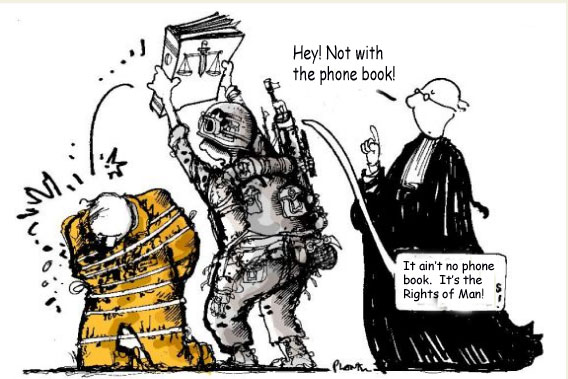
Baghdad. General Martin Dempsey accused Iraqi Security officers of torturing prisoners.

Baghdad. The US Army has been secretly delivering payola to Iraqi newspapers to publish articles written by the US military to better the image of the United States.

Jerusalem. An plea bargain was made in the case of Tali Fahima, 29, accused of having contacts with a "foreign agent", Zakaria al-Zoubeidi, of the al-Aqsa Martyrs Brigade. Fahima will serve less than one year in prison

Baghdad. Four Iranians kidnapped north of the capital were later released and have taken refuge in the Iranian consulate in Karbala. Witnesses say uniformed Iraqi police were among their kidnappers.

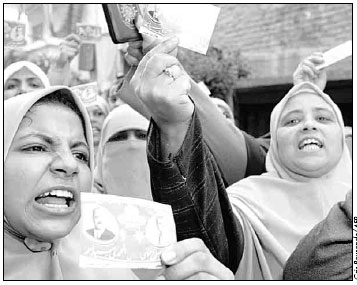
Cairo. One hundred supporters of Hamdin Sabahy, an Arab nationalist and leftist MP from the Nile delta, were arrested. Police took their identity documents to prevent them from voting.

23:54 Baghdad. Undersecretary of State Nicholas Burns suggested Wednesday that European and other nations might apply curbs on trade and investment in Iran should the next round of negotiations fail to halt Iran's drive for nuclear weapons.

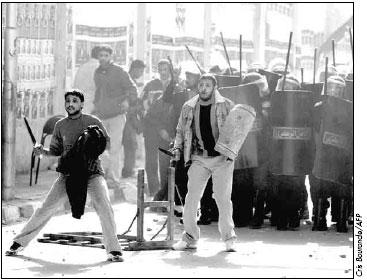
23:53 Dubai. Bahrainis protesting against unemployment clashed with police in the capital Manama late on Wednesday. Protesters threw stones and molotov cocktails, setting fire to two police cars, after officers moved in to disperse them.

23:54 Vienna. U.N. investigators will start questioning five Syrian officials on Monday at UN headquarters in Vienna about the assassination of Lebanon's former prime minister.

22:28 Washington House Democratic Party Whip Nancy Pelosi has supported John Murtha's call for an immediate US miltiary pullout from Iraq.

21:28 Berlin. Chancellor Angela Merkel spoke on the subject of hostage Susanne Osthoff. "We shall not be blackmailed", said Merkel after a death threat from Osthoff's captors.

16:42 Ramallah. Palestinian President Mahmoud Abbas's Fatah party scrambled on Wednesday to salvage a primary election rocked by turmoil that has widened internal rifts ahead of a political battle with its Hamas rival. A day after Abbas suspended voting in response to violence and fraud, Fatah's Central Committee decided to name a 24-member review board, chaired by the president, to finalise a list of the party's candidates for a parliamentary election on Jan. 25.

16:36 Ramallah. Three top leaders of Hamas are among the Islamic militant group's candidates for parliament. Hamas has said it would only reveal its list of candidates at the last moment --the deadline is mid-December-- for fear candidates would be targeted by Israel. However, Hamas said Wednesday that among the top candidates in Jan. 25 parliament elections are Mahmoud Zahar, Ismail Hanieh and Hassan Yousef. Rasha Rantisi, the widow of Abdel Aziz Rantisi, a Hamas leader killed by Israel two years ago, is also on Hamas' list, along with other women candidates.

16:32 Karachi. Hispano-Syrian Mustafa Setmariam Nasar, alias Abou Moussab al-Souri, a suspected member of al-Qaeda, was arrested in Pakistan three months ago.

16:28 Washington. President George W. Bush, facing growing doubts about his war strategy, said Wednesday that Iraqi troops are increasingly taking the lead in battle but that «this will take time and patience.» In a speech defending his policy, the president said, "We will stay as long as necessary to complete the mission. If our military leaders there tell us we need more troops, I will send them."

16:26 Cairo. Nearly 600 Muslim Brotherhood militants were arrested over the last few days. So far, MB has won 76 our of 444 seats in the national legislature. Most arrests were carried out in the Province of Dakahlia.

16:24 Washington. President George W. Bush said in a speech today that Iraq ha become the "main front in the War on Terror".

16:23 Ramallah. The Fatah Central Committee has decided to continue the primaries to select candidates for the general elections in January.

16:10 Baghdad. Sunni Arab leaders in Iraq voiced anger on Wednesday over a Norwegian company's oil deal struck exclusively with Kurds in the north and warned such projects could deepen sectarian divisions. Small Norwegian oil firm DNO on Tuesday became the first foreign company to drill for oil in postwar Iraq through an agreement negotiated with Iraqi Kurdistan.

16:09 Washington. Bush administration makes public document on US aims in Iraq entitled, National Strategy for Victory in Iraq.

14:10 Brussels. Belgian authorities in the regions of Brussels and Antwerp arrested 14 persons said to be linked to a Belgian woman,Muriel Degauque, who carried out a suicide attack three weeks ago in Baquba.

13:22 Berlin. Kidnappers in Iraq have threatened to kill a German woman and her driver unless Berlin stops all cooperation with the U.S.-backed Iraqi government.

13:00 Washington. Partial troop pullout from Iraq may take place in 2006.

07:29 Riyadh. Two women have won an unprecented victory in Saudi Arabia, where they have been elected to the Board of Directors of the Jeddah Chamber of Commerce. Lama al-Souleiman and Nashwa Taher, 44, won with 3,880 votes with only 100 from other women.

07:03 Baquba. Eight persons are dead after ten gunmen opened fire on their minibus.

06:13 \Tokyo. Japan will keep its contingent in Iraq until May 2006.

Tuesday, November 29, 2005

29 November Events in Iraq and in the Region

Ramallah. Palestinian President Mahmoud Abbas has decided to cancel the ongoing primary elections in a part of the territories. Today's elections in East Jerusalem were cancelled. Meanwhile, Hamas won over Fatah in student elections at al-Najah University in Nablus.

Jerusalem. Israel to test new crossing. Israel will test the ultramodern Kalkilya crossing through the Security Wall between the West Bank and Israel.

Rafah. Israeli PM Ariel Sharon travelled to the border with Egypt to study the problem of "contraband from Egypt".

Jerusalem. Labour MP Dalia Yitzhik has joined Ariel Sharon's new political party. Meanwhile Shimon Peres announced that he would also leave the Labour party to join Mr. Sharon.

London. PM Tony Blair denies knowledge of a US plan to bomb al-Jazeera.

Baghdad. The legal team for Saddam Hussein to demand more protection. In October, Saadoun Janabi, attorney Awad Ahmed al-Bandar, was kidnapped and executed. In November, Adel Mohammed Abbas, attorney for Taha Yassin Ramadan, was shot dead by armed gunmen, who also wounded Tamer Hammoud Hadi, attorney for Barzan al-Tikriti, half-brother of Saddam Hussein.

Baghdad. A German woman, Suzanne Osthoff, 43, and her chauffeur were kidnapped. Osthoff is an archaeologist who has resided in Iraq for the last 10 years and had related to the German newspaper Neue Osnabrücker Zeitung (NOZ) that she had be threatened with abduction. She has an 11 year-old daughter.

Ramallah. Twenty Palestinians, including Abdelrahim Mallouh, a leader of Popular Front for the Liberation of Palestine (PFLP), imprisoned at the Ofer Israeli military base on the West Bank, were injured in a riot provoked last night by the transfer of four PFLP prisoners to another prison. In the aftermath of the incident, 1,100 Palestinian prisoners went on a hunger strike in solidarity.

Rafah. The Palestinian Minister for Civilian Affairs, Mohammed Dahlan, says only the Palestinian Authority may refuse passage of travellers through the Rafah terminal.

Cairo. The Egyptian government announced it will refuse to legalize the Muslim Brotherhood. Osama el-Baz, advisor to Hosni Mubarak, said that no political party with a religious affiliation will be permitted. Meanwhile another 20 Muslim Brotherhood members were arrested.

Cairo. Egyptian lawyers demonstrate againt voting booth fraud in support of Egyptian magistrates

23:58 Ottawa. Canada will do everything possible to obtain the release of its nationals kindapped in Iraq.

23:52 Toronto. The NGO Christian Peacemaker Teams (CPT) beleives the kindapping of its four employees --American Tom Fox, 54, Briton Norman Kember, 74 , and two Candians, James Loney, 41 and Harmeet Singh Sooden, 32-- was due to "illegal acts on committed by the United States and Britain".

23:50 Fallujah. A Sunni cleric was assassinated Tuesday by unknown gunmen in front of his mosque in Fallujah. Sheikh Hamza Abbas al-Issawi, the head of the Association of Muslim Scholars in the city, was leaving the al-Wahda mosque after evening prayers when several cars drew up and men inside opened fire on the sheikh.

23:49 Doha. Al-Jazeera broadcast video Tuesday of four Western peace activists held hostage by a previously unknown group, part of a new wave of kidnappings police fear is aimed at disrupting next month's elections. The news station said the four were seized by the Swords of Righteousness Brigade, which claimed they were spies working under the cover of Christian peace activists. The brief, blurry tape was shown the same day German TV displayed a photo of a blindfolded German archaeologist being led away by armed captors in Iraq. The kidnappers threatened to kill Susanne Osthoff and her Iraqi driver unless Germany halts all contacts with the Iraqi government.

23:46 Washington. The U.S. Army has launched an unprecedented effort to coax former troops to sign up again for active-duty military service. The Army this month began contacting 78,000 people who previously served in the Army, Navy, Air Force and Marine Corps to pitch them on the idea of leaving behind their civilian lives and returning for another stint in uniform. Bonuses ranging from $5,000 to $19,000 are being offered and the Army also dropped a rule that had blocked former soldiers from getting training in a different career field than they previously had worked.

23:28 Washington. US Secretary of Defense insisted that progress was being made in the transfer of control of Iraq to Iraqi security forces.

23:07 Washington. General Peter Pace declares the use of white phosphorus as an incendiary munition "legitimate."

21:48 Rawa. Nine presumed terrorists arrested.

20:30 Balad. The six Iranian pilgrims kidnapped this morning have been released.

23:21 Ramallah. The Palestinian minister in charge of relations with Israel, Saëb Erakat, has requested aid from Washington to ensure the success of the Palestinian legislative elections.

18:26 Baghdad. General John Abizaid says there has been no concrete decision to withdraw coalition troops. Earlier in the day, Iraqi Security Minister Mowaffaq al-Rubaie has announced the pullout of 30,000 US troops in 2006.

17:08 Baghdad. Six mortar rounds directed at Camp Falcon south of the capital. US forces then closed down a major highway between Baghdad and the south of the country.

16:46 Mosul. Two Assyrian Christians were shot dead as they hung election posters. Two others were wounded.

16:13 Baghdad. One of the British pilgrims wounded yesterday when gunfire struck a coach carrying pilgrims to Najaf and Karbala has died. He was 69 and lived in London. Two other Britons were also wounded. The pilgrims were of Indian origin and entered Iraq from India via Tehran.

16:05 Tarmiyah. Suicide carbomb kills 8 Iraqi soldiers.

15:01 Baghdad. Roadside bomb kills two US soldiers north of the capital.

14:37 Bethlehem. A gunfight broke out between Palestinian security forces and Israeli soldiers out-of-uniform. A Palestinian policemen was wounded in the leg by the Israelis.

13:47 Balad. Two Iranian pilgrims kidnapped yesterday were released.

09:32 Balad. Six Iranian pilgrims, including three women, and their guide were kidnapped on their way to Najaf and Kerbala.

Update on CIA Secret Prisons in Europe

I wonder what the CIA fund that corrupts foreign civil aviation authorities is called?

From Le Monde:

The European Commission revealed on Monday 28 November that it has requested clarification from the United States on the alleged existence of CIA-run clandestine prisons in Europe.

According to the European Commissioner for Justice, Franco Frattini, his Director-General, Jonathan Faul, has contacted the White House and the US State Department for information on the secret activities of the CIA. So far, unfortunately there has been no assurance that the information on the prisons was baseless. The Americans have asked for a delay to answer the EU request. Speaking in Berlin from the sidelines of a meeting on security, Mr. Frattini said that the response from Washington could be interpreted in three ways: That the accusations are true; that they are false or that the White House needs more time to formulate a reply. The attitude of the EU will depend on the time it takes to receive a US reply, he warned.

Information from certain eastern European countries suggests that the CIA used European nations for the transport, illegal detention and torture of alleged Islamic terrorists. The Commissioner threatened EU member states with loss of their voting privileges within the European Council if the existence of secret CIA prisons on their territory is confirmed.

Germans Express Concern

According to the new conservative Minister of Defense, Franz Josef Jung, on a visit to Paris, Germany also expects clarification form the United States. The question is to know if torture has taken place. That is the matter which worries us. I hope this can be cleared up. He emphasized that the new German Foreign Minister, Frank-Walter Steinmeier, now in Washington, is to meet on Tuesday with Secretary of State Condoleezza Rice. Over the weekend, Mr. Steinmeier believed it was timely for the British Chairmanship of the European Union to officially request an explanation from the United States. The Ramstein Airbase and the military area of Frankfurt Airport, among other locations, constitute veritable hubs for US forces.

55 CIA Stopovers in Canada

The newspaper La Presse reports that US aircraft chartered by the CIA and suspected of having transported Islamic detainees made 55 stopovers in Canada over the last four years. Eight of these flights continued to Guantanamo, Cuba, where several hundred Islamists are held as part of the War on Terror.

Other flights transited through Canada heading for Spain, the UK, Portugal or Germany without the final destination being known. However, the planes are on a list drafted by Human Rights Watch, which has catalogued the aircraft used by CIA front companies. The Canadian Minister for Public Safety, Anne McLellan, told Parliament that she possessed no information concerning the landing of an alleged CIA flight which would be used for this type of transport.

Monday, November 28, 2005

Marwan Barghouti or the Whirlwind

The young guard of Fatah unseat the organization's old leaders

Fatah militants have decided to inject new blood into this historic Palestinian movement by displacing the old guard during the primaries organized last Friday which will determine the Fatah candidates for the legislative elections scheduled for January 25th. It was the result of pressure from the new guard, seeking to do shake up the faction’s leadership, that primaries have been introduced to select the 132 candidates to the Legislative Council from among the more than a thousand hopefuls. The Fatah organization had been accustomed to name the candidates since the era of Yassir Arafat. But this time, the candidates will be chosen by the 463,000-member party following, who have been critical of the impotence and corruption of the current leadership.

In Ramallah, Marwan Barghouti, the icon of the new generation, won the vote despite the life sentence that he is serving inside an Israeli jail. Mr. Barghouti, who is a Palestinian MP, received 96% of vote cast, or 7,000 votes, taking a commanding lead in the field of 45 candidates in his district. He will play a central role in countering the Islamists of Hamas during the legislative elections. His incarceration has no effect on his importance on the Palestinian political chessboard.

The victory scored by Mr. Barghouti is equivalent to a veritable plebiscite—he may actually head the list of Fatah candidates by pulling in front of Prime Minister Ahmed Qoreï, say party officials. Palestinian Authority President Mahmoud Abbas, who has called for an end to armed struggle, could conceivably share a ticket with Mr. Barghouti to prevent the radical Islamists of Hamas from taking a bite out of the Fatah party base. For the wife of Mr. Barghouti, the results of the primary express clear-cut support for armed struggle.

Despite the five consecutive life terms to which he has been sentenced, an Israeli minister does not exclude that Mr. Barghouti may be one day released as the result of a peace agreement with the Palestinians. In politics, never say never, quipped Israeli Transportation Minister Meïr Shetrit, who has just joined Kadima, the new party founded by Prime Minister Ariel Sharon. However, the Israeli Minister of Foreign Affairs, Sylvan Shalom, categorically excluded the release of Mr. Barghouti.

An Israeli military tribunal has condemned yet another Palestinian MP and Fatah member, Hossam Khader, to seven years in prison for transfer of fund to “terrorist organizations”. Mr. Khader is the second Palestinian MP to be imprisoned in Israel, after Mr. Barghouti.

[From L'Orient-Le Jour]

EU Report on Israeli Land Grab

The words of Juan Cole:
When the last Arab is gone and the city is 100 percent Jewish, there is going to be a howl of outrage from the Muslim world that will make September 11 look like a minor incident.

And the dwarves were busy yesterday: Some 200 olive trees were uprooted or chopped down yesterday by armed Israeli settlers near the village of Salem.

EU discovers Israel hard at work completing its annexation of Jerusalem

The policy implemented in East Jerusalem by Israel jeopardizes any negotiated settlement for the future status of the city, one of the thorniest issues in the Israeli-Palestinian conflict. This is the conclusion of an incisive report drafted by European diplomats in Jerusalem and Ramallah and presented to the European ministers of Foreign Affairs. The document has not yet been made public for diplomatic reasons. (After negotiations with Israel, the Europeans have just reached an agreement to grant them a presence at the Rafah crossing between Egypt and Gaza that officially opened on November 25.) The observations and recommendations by the diplomats may be presented within a few weeks.

All the policies implemented by the Israeli authorities in the Arab neighborhoods and suburbs of Jerusalem, annexed after the Israeli conquest in 1967, have been carefully reviewed in the report. The diplomats condemn the continuing colonization as well as the construction of roads meant to connect existing settlements. The strategy, which aims to “complete the annexation of Jerusalem” goes against the obligations of Israel under international law and the Road Map, a peace plan recognized by the international community and by Israel.

According to the diplomats, the policies are reinforced by the construction of the so-called Security Wall, which Israel has been building since 2002 on Palestinian lands. The barrier is not only motivated by security considerations, insist the diplomats, who are skeptical of its temporary character and well aware of the fact that it separates Palestinians from other Palestinians, instead of separating Palestinians from Israelis. Its route cuts off 230,000 Arab residents of East Jerusalem from the West Bank. They underscore that the viability of a Palestinians state depends in a large measure on the preservation of links between East Jerusalem, Ramallah and Bethlehem [on the West Bank].

Given Israel’s overall strategy, the future of a two-state solution sharing their capital in Jerusalem is fading from view. The diplomats suggest that European governments clearly reaffirm that the status Jerusalem remains subject to negotiation. They propose the organization of a new round of meetings with Palestinians representatives in East Jerusalem to breathe new life into Palestinian institutions as provided for by the Road Map.

But according to the Israeli press, should such initiatives be attempted, European representatives would be banned by the Israeli government.

Stéphanie Le Bars
Le Monde 26.11.05

Let's Go Kill Us Some Innocent Iraqis

and Make Us a "Trophy Video", too.

UK Sunday Telegraph reports that contractors working for Aegis Defence Services (a UK company) opened fire with automatic rifles at civilian cars on "route Irish", a road that links the airport to Baghdad and recorded a video of their actions.
In one of the videoed attacks, a Mercedes is fired on at a distance of several hundred yards before it crashes in to a civilian taxi. In the last clip, a white civilian car is raked with machine gun fire as it approaches an unidentified security company vehicle. Bullets can be seen hitting the vehicle before it comes to a slow stop.

There are no clues as to the shooter but either a Scottish or Irish accent can be heard in at least one of the clips above Elvis Presley's Mystery Train, the music which accompanies the video.
Blogger Barekuncklepolitics has the video. [.wmv extension]

Sunday, November 27, 2005

Egypt: Unfree and Unfair Elections

LEMONDE.FR | 27.11.05 |

Elections continue in Egypt amidst a climate of tension.

The second phase of Egyptian elections was held yesterday, Saturday, November 26. There are three phases of the national legislative elections, each with two rounds. Up until Saturday, the Muslim Brotherhood had won 47 seats vs. 120 to the party in power. Today, Sunday, the Muslim Brotherhood says it has won an addition 28 seats, making a spectacular breakthrough. However, the results are not official and await confirmation. Nevertheless, if the figures are confirmed, the Islamist movement now has 75 seats in the 454-seat legislature making it the most serious opposition group in the country. Another 49 Muslim Brotherhood candidates are preparing to run in the third and final phase of the vote to take place at the beginning of December.

In the second phase, 121 seats were up for grabs in a very tense climate. The Muslim Brotherhood reported that early on Saturday 860 of its members and sympathizers had been rounded up beginning at dawn with arrests at domicile and continuing with arrests outside the polling booths. Thousands of anti-riot police were deployed in voting districts where the Brotherhood was running a candidate. According to witnesses, police closed down polling stations or strictly limited access.

In the area surrounding Alexandria, clashes broke aout between police and young Islamists at the end of voting, around 7 :00 pm. So this is the response of government to people who want to exercise their right to vote? asks Walid, a carpenter. In another quarter of Alexandria, Taher Abdel Fattah says he was prevented by a cordon of police from casting his vote.

A spokesman for the Interior Ministry [Lying liars extraordinaire--Nur] explained that police surrounding polling stations were there to ensure orderly voting. Reporters for AFP, Reuters, BBC and AP were harassed and had their equipment or documents confiscated.

Faced with the situation, judges in charge of monitoring the vote did not hesitate to rebel, accusing security forces from keeping voters from the polls, ostensibly to prevent Muslim Brotherhood candidates from winning. A communiqué from the Jurists’ Club (a professional organization) denounced the attitude of the police, manipulations of voter lists, interference and occasional curtailment of voting.

Abdel Mouezz Mohamed, spokesman for the Muslim Brotherhood, announced that 56 judges refused to participate in vote-counting because of flagrant fraud. Observers have reported on clashes in some polling stations between members of the ruling party, the National Democratic Party, and the Muslim Brotherhood.

Although the Muslim Brotherhood did not present sufficient candidates to rob the NDP of its majority, its electoral success has destabilized the government and the party in power. On Saturday, President Mubarak cancelled his attendance at the European-Mediterranean Summit in Barcelona on 27 and 28 November due to current events in the region.

Saturday, November 26, 2005

26 November 2005 Events in Iraq and in the Region

23:47 Baghdad. Human rights violations in Iraq are worse now than under Saddam Hussein, said former Iraqi Prime Minister Iyad Allawi in an interview with The Observer (UK).

23:31 Kabul. Four US soldiers recalled for burning bodies of Islamic fighters. General Jason Kamiya insists the corpse burnings were "hygenic."

22:18 Baghdad. UN Envoy to Iraq, Ashraf Kasi, is concerned that continuing bombings and the recent torture scandal will keep voters from the polls. Kazi says there will be no international observers for the 15 December elections due to security concerns.

22:54 Tehran. Supreme Guild Ali Khamenei sent a "fraternal" message to Saudi Arabia's King Abdallah ben Abdel Aziz.

21:18 Cairo. Egyptian President Hosni Mubarak informed Spain's King Juan Carlos that he will not attend the European-Mediterranean summit in Barcelona due to various Middle Eastern crises.

23:15 Washington. The White House announced it would support a recent initiative in the US Senate to start preparing for a pullout from Iraq. According to Senator Joseph Biden the plan calls for the withdrawal of 50,000 troops in 2006 and "a significant number" of the remaining 100,000 in 2007.

23:13 Paris. Algerian President Bouteflika hospitalized.

20:33 Rafah. 1,587 use border crossing today between Egypt and the Gaza Strip.

19:37 Egypt. Authorities arrest 620 members of the Muslim Brotherhood, blaming them for violence at polling stations.

19:18 Egypt. Polls close. Election results for 122 parliamentary seats to be announced on Monday.

19:05 Pristina. Major Michael Wunn denies charges by EU Commissioner Alvero Gil-Robles that there are "little Guantanamos" in Kosovo run by the United States.

18:45 Ramallah. Marwan Barghouti wins Al Fatah primary in Ramallah with 96% of the vote.

16:08 London. Judge confirms arrest of 25 year-old Rauf Abdullah Mohammed on terrorism charges.

15:33 Cairo. Egyptian police block access to polling booths in nine provinces.

15:09 Baghdad. US announces the death of a close collaborator of Abu Musab al Zarqawi on October 14 in Ramadi.

14:42 Baku (Azerbaijan). Police use force to break up a demonstration alleging election fraud.

13:11 Teharan. President Ahmadinejad says George W. Bush should be prosecuted for war crimes due to use of artillery shells made of depleted uranium in Iraq.

12:43 Kabul. Four police kidnapped near Sharkh in Logar Province during clash with rebel commando team.

12:35 Samarra. Death toll in suicide bombing climes to 12. Nine automobiles were destroyed in the blast.

12:24 Rome: Berlusconi claims 200 terrorists have been "captured" in Italy.

11:56 Samarra. Six dead and sixteen wounded in suicide bombing at a gasoline station.

11:10 Baghdad. Main witness against Saddam Hussein in Dujail massacre dies of natural causes.

10:57 Moscow. Russia announces new stealth anti-aircraft system, the S-400 "Triumph".

10:29 Baghdad. Hospitals running short of blood. Surgeries cancelled.

10:24 Tehran. Islamic militants, the "Basiji", form human chain across Iran.

09:40 London. Amnesty International accuses London of approving the practice of torture.

07:19 Baghdad. Carbomb targeting a US patrol kills 4 civilians.

01:22 Hebron. Two Hamas members arrested in a refugee camp south of Hebron.

01:39 Kabul. Swedish soldier killed and three wounded by bomb in Mazar-i-Sharif.

Friday, November 25, 2005

CIA Detention Centers in Europe: GPS to the Rescue

LEMONDE.FR | 25.11.05 | 18h08

Satellite photos could put an end to debate surrounding the CIA's secret prisons.


The MP in tapped to draft a report on the CIA secret prisons by the Parliamentary Assembly of the Council of Europe believes that satellite images would be able to show evidence of the existence in Europe of CIA detention centers.

Using the GPS coordinates which I have in my possession, it should be possible to obtain a series high definition satellite images covering those locations over time, from 2002 to the present time, wrote Dick Marty, a Swiss parliamentarian, in a memo published on Friday 25 November in Strasbourg. Mr. Marty has already contacted the EU Satellite Center in Torrejón, Spain.

Dick Marty also cites specific locations likely to host secret detention centers reported by Human Rights Watch: Szymany Airport in northeast Poland, Mihail-Kogalniceanu military airfield in southern Romania and a second Romanian location, the Fetesti military airfield. These countries have denied the allegations.

En route for Bucharest, Dick Marty says he has demanded high definition satellite images taken between 2002 and 2005 from the Romanian authorities which would allow the detection of new construction, such as barbed wire or guard towers. However, Marty says he is convinced that there are no Guantanamos in Romania.

But he doesn’t exclude the existence in Romania of small centers holding one or two detainees temporarily to extract information. It is also possible that CIA planes stayed 10, 20 or 30 days on Romanian territory. That is extremely difficult to find out, Marty continued, but the truth could come out in a number of different ways.

...

CIA Secret Prison in Kosovo


Camp Bondsteel, Kosovo

A NATO base in UN-administered Kosovo is home to a US-run secret prison.

Story by Natalie Nougayrède | Le Monde| 25 Nov 2005

As the number of questions being asked grows across Europe on the existence on the continent of a chain of secret prisons run by the CIA, the EU Commissioner for Human Rights, Alvaro Gil Robles, describes for the first time what he saw in September 2002 at a site which until now had not been mentioned in the controversy of extrajudicial detentions and the war on al-Qaeda: The US military base at Camp Bondsteel in Kosovo.

Within this imposing base, which is home to 6,000 US Army troops and spreads across 300 hectares near Ferizaj, south of Pristina, the “capital” of the UN-administered province of Kosovo, Gil Robles saw a replica of Guantanamo. A prison has been built inside Camp Bondsteel. [Home to the Laura Bush Education Center--Nur] Run by the US Army, it is the principal detention center for KFOR, the multinational NATO force deployed to Kosovo in June 1999.

From a tower, I saw a place which looked like a replica of Guantanamo, but on a smaller scale, Gil Robles tells Le Monde. Small rudimentary wooden shelters were surrounded by a tall barbed wire fence. I saw between fifteen and twenty prisoners inside in huts, dressed in orange jumpsuits like those used in Guantanamo. The prisoners I saw were not shackled. Most of them were sitting down, some isolated from the others. Some prisoners had beards. Others read the Koran. There were walkways around the cells for guard duty. A US female soldier who worked at the prison explained to me that she had just been transferred there from Guantanmo, Gil Robles continues. He also met with a representative of the US Department of Justice.

"Shocked" by what he say in Camp Bondsteel, Gil Robles requested on the day after his 2002 visit that detention operations end and that the buildings resembling Guantanamo be dismantled. He says he received assurances that this would be done the following year.

However a number of questions remain unanswered. Was the prison at Camp Bondsteel used in “rotations” of prisoners by the CIA between Afghanistan, the Middle East, Europe and Guantanamo? Have there been or are there now places of secret detention? On whose jurisdiction does a KFOR prison inside Camp Bondsteel depend?

In 2002 at Camp Bondsteel and in Guantanamo, the prisoners did not have access to legal counsel. Their incarceration was not the result of any judicial procedure and their place of origin is fluid. The legal limbo of Kosovo has contributed to the situation. The province is under UN administration pending a definitive determination but the multinational force is NATO and has significant prerogatives. Camp Bondsteel is a zone of un-law. As it was being built in 1999, the camp was described as the largest US base since the Vietnam War.

Among the detainees seen by Gil Robles, four men were North African while others appeared to be Kosovars or Serbs. According to the official version, the four men were arrested by KFOR along the Macedonian border and were detained for compelling reasons of “security.” But on paper the reason for detention was strange: “Resolution 1244”, referencing the UN Security Council resolution covering Kosovo and the powers of KFOR.

Alvaro-Gil Robles requested permission to visit the prison inside Camp Bondsteel after KFOR carried out a number of extrajudicial arrests in Kosovo. He was escorted to the base by the KFOR commander at the time, French General Marcel Valentin, who was visibly upset by the fate of the prisoners.

The use of a base linked to a NATO operation under the aegis of the UN in the "war on terror" raises the question of transparency of US activities vis-à-vis its allies.

These facts go back three years. The fact that Gil Robles has waited until now to talk about is raises an eyebrow. The report which he published following his trip barely mentioned Camp Bondsteel. The priority at the time was to facilitate the admission of Serbia-Montenegro to the Council of Europe, accomplished in 2003.

The reason why he recalls the episode now, says Gil Robles, is his growing suspicion concerning the existence of secret prisons run by the CIA and the apparent scale of the transfers by special planes of prisoners suspected of links to al-Qaeda.

I cannot prove the link between [the transfers] and Camp Bondsteel, because I do not possess concrete evidence
, says Gil Robles. But I believe that we must demand an explanation of the activities inside that base in Kosovo as well as other suspicious sites in Europe. (End)

P.S. There may be other secret prisons in Kosovo. Remember that bizarre shoot out at a Kosovo detention center near Mitrovica between female US MPs and a Jordanian police unit in April 2004 which was quickly hushed up?
An American former correctional officer serving with the U.N. mission in Kosovo was in critical condition Sunday, a day after an attack on a group of prison guards, most of them Americans, by a Jordanian policeman also serving with the U.N. mission in Mitrovica.

Two American women died in the shooting and another nine American officers were wounded at a jail in the city of Mitrovica in the northern part of the province on Saturday. An Austrian prison guard was also wounded. The Jordanian officer was killed when the guards returned fire.
Um, now just what would have provoked some individuals in that Jordanian police unit to do a thing like that? Clan members of some detainee, perhaps? Some Koranic outrage in a prison camp they might have witnessed?

Alas, poor Arafat!


Le Monde's Jerusalem correspondent Gilles Paris parts the veil of "progress" to reveal the hopelessness of the Palestinian situtation and the purloined legacy of Yitzhak Rabin.

Arafat and Rabin: The remains of inheritance

Two peoples came to render homage to two symbols. On November 11 Palestinians marked the first anniversary of the death of Yassir Arafat, who passed away in a French military hospital. The following day, Israelis came together in Tel-Aviv to commemorate the 10th anniversary of the death of Yitzhak Rabin at the site where he was assassinated by an extremist Jew. United briefly by a Nobel Peace Prize won in 1994, the pair did not come to their place in history in the same fashion. Sublime by martyrdom, Yitzhak Rabin became the incarnation of willingness in the collective memory, even if only an illusion. Yassir Arafat paid a dear price for his ambiguities and hesitations, carrying away with him general opprobrium.

The hyped presence of former President Bill Clinton in Tel-Aviv and his absence the day before in Ramallah has come to represent the common judgment of these two men. The judgment is particularly harsh for the founder of the Palestinian national identity. The old leader did his utmost while alive to inflate the ranks of his detractors.

Incapable of explaining the reasons for the collapse of the Camp David talks in July 2000, then incapable of measuring the consequences of September 11, 2001, Arafat multiplied his poor decisions and ambiguities up until the day of his death while his opposite number, Israeli Prime Minister Ariel Sharon, repeatedly demonstrated his tactical intelligence.

Muzzled by Israel then silenced by the United States while receiving more or less tepid support from the European Union and his Arab neighbors, Yassir Arafat wasn’t exactly regretted by the international community. The election of Mahmoud Abbas on January 9th could only but be a comfort those who saw in his predecessor the source of all their woes. Elected on a program of rejection of violence, this long-enduring artisan of dialog and negotiation rapidly renewed ties with Israel and the United States. The Israeli evacuation from Gaza at the end of the summer reinforced the impression of the arrival of a new era, even if Sharon took the decision in defiance of his own party, of the will of Arafat while he lived and in disregard of internal Palestinian hazards.

Despite an accumulation of encouraging signs, today's less than ideal reality is more than vexing. Those who considered the founder of the Palestinian national movement to be “the main obstacle” to peace or who viewed him as “part of the problem, not the solution” could legitimately believe for a time that his disappearance was going to change everything. But nothing has changed. There is no visible momentum two months after the end to colonization of Gaza. The peace negotiated by Abbas at the beginning of the year is more and more fragile. The “Road Map”, the most recent international peace plan, which provides for the creation of a Palestinian state at the end of 2005, has been reduced to wishful thinking.

The sheer weight of the sad state of Israeli-Palestinian relations has caused us to relativize factors of personality, as overwhelming as they may seem. But it is a weight with which we are quite familiar. The Oslo Accords institutionalized the unequal relationship that the Palestinians maintain with the Israelis -- occupied and the occupiers.

The haphazard application of the provisions of the Oslo Accords assuaged the fears of those who, like many of Accords’ detractors, were by and large not hostile to peace or to dialog with Israel but who nevertheless viewed them as complicated mechanisms set in motion after very bad bargain.

The failure of Oslo and five years of Intifada left standing an artifact ingrained with contradiction—a Palestinian Authority intended at first as a placeholder but which has endured by default; an entity which is not at all an authority and even less a state, even if it curiously appears in certain international rankings, such as the list drawn up by Transparency International of the world’s most corrupt governments. The Palestinian Authority coincides with the Israeli policies adopted for the West Bank in this aspect: it is content with the control of the most important Palestinian agglomerations while Israel controls the facts on the ground in the main of the Palestinian territories. Surveillance of Gaza continues from the periphery by land and by sea, with the exception of a morsel of territory on the Egyptian frontier.

Status Quo

The only way out for the Palestinians lies is the opening of negotiations towards a final agreement. This is the calculus of Abbas, who has followed in the footsteps of Yassir Arafat in rejecting any intermediate solution which might gel into a permanent situation. Jewish colonization continues apace on the West Bank. In January 2006, the total number of settlers — including those in the annexed parts of Jerusalem — will be, once again, greater than that of the previous January as has been the case for the last thirty years.

Conversely, Sharon, as the prime beneficiary of the status quo, is tempted by unilateralism and the possibility, given the lassitude of the international community, of drawing the provisional frontiers of a future Palestinian state according to his own design. This eventuality, which enjoys popularity in Israel, is in opposition to the borders which the Labourite Yitzhak Rabin had in mind.

It is as if the cult status accorded Sharon every year by the Israeli public has no translation in politics. The Israeli PM imposes his conditions, starting with the demand to disarm the Palestinian militias as stipulated in the Road Map--including the Islamic Resistance Movement (Hamas).

Such a demand can be considered legitimate because it would translate into a return for the Palestinians to law and order, seriously impaired, in Gaza and in the Palestinian territories. However, it should not be a precondition-- as such it is an act of contempt towards Abbas. But neither should Israeli be released from its obligations which include, at least theoretically, a total freeze on settlements according to the same Road Map.

Basking in the glow of the Gaza evacuation, Sharon is, for now, in a position of strength to achieve his aims—unless the election of Amir Peretz, the inheritor of the legacy of the assassinated Rabin, as head of Labour Party reinstalls Israeli society with the taste for peace and the necessary will to achieve it.

23.11.05

25 November Events in Iraq and in the Region

Baghdad. Major Iraqi offensive planned. We are going to strike with force against the hotbeds of terrorism in several provinces, declared Iraqi Interior Minister Bayan Jabr Soulagh in a press conference on Thursday. We are going to engage 10 000 men in thousands of military vehices before or after the elections of 15 December.

Baghdad. US forces have just concluded a wide-scale 3-week operation, "Steel Curtain" aiming to destroy rebel bases before the elections. General Rick Lynch said 700 rebels had been killed and 1,500 captured since September.

Baghdad. An influential member of the Committee of Iraqi Ulema, Sheikh Mahmood Mehdi al-Sumaydaï, stated that resistance was not terrorism during his sermon at Umm al-Qoura Mosque in west Baghdad. The principal Iraqi political parties agreed in Cairo last week that "resistance" was legitimate but condemned terrorism.

Samarra. One civilian was killed and three wounded in a bombing of a police patrol.

Mosul. Unknown gunmen kidnapped Ibrahim Saleh Osman, a member of Massoud Barzani's DPK. His bullet-ridden body was found some time later.

Baghdad. A US soldier driving a Abrams tank was killed in south Baghdad when it flipped over.

Aaziziyah. Police claimed they stopped a car with 300 mortar rounds near the Iranian border. The munitions were Iran-Iraq war surplus said to be used in carbombs

Brussels. The EU reports that Israel has redoubled its efforts in expropriating Arab land in east Jerusalem to prevent the Palestinians from establishing their capital there.

Beirut. Hezbollah leader Hassan Nasrallah vows to continue struggle against Israel and rejects suggestion to disarm. Several Hezbollah fighters were killed in the last few days in clashes with Israel.

London. Al Jazeera CEO Waddah Khanfar is in the British capital to demand an explanation from PM Tony Blair on the 2003 threat to bomb the network in Doha.

Gaza. Rafah passage to Egypt opens.

Beirut. The Red Cross restituted the remains of three Hezbollah fighters killed by Israel. The remains of Wissam al-Bawab, 26, Ali Shamseddin, 26, and Mohammed Baker al-Mussawi, 25, were restituted to Sheikh Nabil Qaouq.

Amman. King Abdallah ordered General Maarouf Bahkit to form a new government.

15:19 Mazar-i-Sharif. A bomb targeting a NATO convoy wounded four NATO troops.

13:55 Berlin. The German newspaper Berliner Zeitung reports that 85 CIA flights landed at Rhein-Main Airbase adjacent to Frankfurt Airport between 2002 and 2005.

Thursday, November 24, 2005

24 November 2005 Events in Iraq and in the Reigon

Baghdad. Government spokesman Leith Koubba announces that a number of "terrorists" have sought refuges in Syria after a US military operation in the Euphrates valley and demands their arrest by Syrian authorities.

Baghdad. The grand marjayah of senior Shi'ite clerics called on Iraqis to vote on December 15.

Baghdad. Government spokesman Leith Koubba announced that PM Ibrahim Jaafari will refuse to go to Syria as long a three issues are unresolved: Security, Iraqi state funds on deposit in Syrian banks and cooperation

Cairo. An Egyptian magistrate has come forward as a witness of vote count fraud in Damanhour, north of Cairo. Mrs. Noha al-Zeini, Deputy Prosecutor, gave an interview to the Egyptian daily al-Masri al-Yom insisting that Gamal Hishmat, a Muslim Brotherhood candidate, was clearly in the lead when she was ordered out of the room. The victory of NDP candidate Mustapha el-Fiqi, Chairman of the Parliamentary Commission on Foreign Affairs, was then announced. Mrs. al-Zeini has called on Egypt's judiciary to boycott the next round of elections insisting that they be transparent.

Rafah. Palestiniens may use the Rafah crossing between the Gaza Strip and Egypt for four hours a day, pending the arrival of EU observers.

Diwaniyah. A small child was killed as she was playing near a US military patrol.

22:36 Budapest. Hungary announced that two planes chartered by the CIA landed at Budapest Airport in the last two years. The aircraft belonged to Devon Holding and Leasing, a company cited by the New York Time as a front for the CIA.

21:17 Abu Ghraib. Government spokesman Leith Koubba announces that a carload of toy-bombs was discovered west of Baghdad.

21:15 Baghdad. Two US soldiers killed by a roadside bomb southwest of Baghdad.

19:46 Milan. Magistrate Armando Spataro accused by Italian Justice Minister Roberto Castelli of militant partisanship in the Abu Omar affair.

19:38 Hilla. Unknown Sunni group "Supporters of the Sunni Community" claims responsibility for carbombing in Hilla. In a communique, the group announced the bombing was an act of revenge for the killing of a chieftain of the Batta tribe, Kathim Sirheed Ali.

18:06 Beirut. German magistrate Detlev Mehlis may question six Syrian officials in Geneva or Vienna.

18:00 Baghdad. 50 Iraqis died in violence today, including 30 in Mahmudiyah

17:49 Baghdad. Six US troops slain in 24 hours. Two soldiers were killed by a roadside bomb while on patrol southwest of Baghdad. Meanwhile a Marine died from his wounds received in a roadside bombing near Hit. Three other US soldiers died Wednesday by gunfire. 2,110 US soldiers and personnel have died since the invasion of Iraq in 2003.

17:02 Mahmudiyah. Three homes destroyed in blast earlier today.

16:58 Tehran. President Mahmoud Ahmadinejad is criticized for attemping to force the Majlis to accept a man loyal to him as Oil Minister. Third nominee rejected.

16:54 Rome. Italian MP Pietro Folena demands that Italian military destroy stocks of white phosphorus.

16:24 Hilla. Carbombing in marketplace kills 14 and wounds 22.

15:35 Amman. King Abdullah II instructed the Jordanian chief of national security, Maroud Makheet, to form a new government.

15:21 Baghdad. Tikrit. Four police and an engineer were killed by unknown gunmen. Meanwhile three Oil Ministry bodyguards were shot dead in the center of the capital.

15:08 Rome. Filiberto Cecchi, the chief of the Italian general staff, refuses to confirm purchse of 3,4000 phosphorus grenades by the Italian military.

14:03 Baghdad. US solider killed by roadside bomb in Hit.

13:00 Baghdad. Roadside bomb 3km from Polish HQ at Camp Echo wounds three Polish soldiers and a child.

12:37 Baghdad. Iraqi Defense Ministry reports that four rebels were killed south of Baghdad by Iraq troops supported by the Americans.

12:00 Vienna. IAEA agrees that Iran should not be allowed to pursue its uranium enrichment activities.

10:50 Mahmudiyah. Death toll in carbombing climbs to 30. Two children and four police known dead. The bomb targeted a US convoy. Four US soldiers were wounded.

10:12 Baghdad: Nine people die in separate incidents. Five members of Iraq's security forces were killed in three separate attacks in the capital, Kadhimiyah and in Tikrit. The corpses of four individuals, strangled and shot, were found in Baghdad.

09:41 Mahmudiyah: 20 dead and 35 wounded in carbombing.

09:27 Mahmudiyah. A carbomb detonated in a parked car in front of Mahmudiyah hospital south of Baghdad. At least 7 are dead and 13 are wounded.

09:07 Baghdad. Three US soldiers die. Gunfire kills two US soldiers west of Baghdad and a third in downtown Baghdad.

09:02 Kabul: One policeman and a civilian were killed and two others wounded by a bomb placed in a police vehicle in Koghyani.

07:41 Doha. Al Jazeera goes on strike against Bush. Al Jazeera reporters will conduct a sit-in strike in all al-Jazeera offices around the world after a British tabloid reveals Bush's intention to bomb al-Jazeera's Qatari headquarters in Spring of 2003.

00:42 Jerusalem: Sharon chooses name for new political party: The name will be "Kadima", or "Forward"

Cindy Sheehan publishes a book


Not One More Mother's Child hit the bookshelves today, with a forward by John Conyers
KOA Books, 203 pages. 15.00 dollars.


Memorial to German war dead, Monte Cassino, Italy

Wednesday, November 23, 2005

The Current Israeli Political Landscape

Update: Sharon dips into the Socialist namepool for the selection of his party's name: Kadima -->Forward! In Italian, this would be Avanti!, the name of a decades-old Socialist journal.

Chat with Le Monde's Jerusalem correspondent Gilles Paris.

What is the current Israeli political landscape?

Is the Labour Party really able to supplant Ariel Sharon?
If Sharon had remained with Likud, the situation would have been very difficult for Amir Peretz. The departure of Sharon opens up some possibilities but everything depends on the campaign and the climate when the moment comes for the elections.

Do you think Amir Peretz was sincere in expressing the desire to see the evacuation of the Palestinian territories by the settlers?

Amir Peretz is to the left of the Labour Party when it comes to relations with the Palestinians. He is an historical figure of the peace movement. He joined the movement when it still carried significant weight. Recently, he proposed a draft legislation to allow the settlers on the “wrong side” of the security wall to receive an indemnity should they leave voluntarily. His convictions are clear, even if he attempts to move his rhetoric to the right, as he has already begun to do, on the question of Jerusalem and Palestinian refugees to win over centrist voters.

Has Israel said goodbye to bipartisanism?
Politics in Israel hasn’t been strictly bipartisan for several years. On the contrary, there has been fractionalization and a continuous weakening of the two big parties since their founding. Labour has been losing ground since the founding of the state of Israel; Likud has been weakening since the 1970s. Their demise has fortified marginal parties, who have forced the two big parties to form coalition governments, which are often unstable. The founding by Sharon of a centrist party has accentuated that fractionalization.

What’s in the cards for Likud, now that Sharon is gone?
Likud has lost its vote-getting locomotive but the departure of Sharon makes sense because there is a gap between what he plans to do about the Palestinians and Likud’s founding ideology. The nomination of Amir Peretz as leader of the Labour Party risks undermining Likud’s hold over “southern cities”, home to the disadvantaged social stratum composed for the most part of Sephardim. Likud is in trouble on two fronts as the early opinion polls show. Everything depends on who takes the reins.

Is Sharon prepared to give up some West Bank colonies ?
Do you think that Sharon is sincere when he says he wants to work toward peace, knowing that his actions contradict what he thinks, or what he wants public opinion to think?

Sharon will attempt to transform the legislative elections into a referendum on his person. It is likely that he won’t say much about the Palestinians. Ambiguity is the best means to hold onto the left wing of Likud and Israeli centrist and leftist voters who follow his lead. It is likely that he will carry out new evacuations from the West Bank after Gaza. For the moment, it is difficult to imagine evacuations negotiated with the Palestinians. Perhaps Sharon believes that he can come to a just-in-time and limited agreement with the US Administration.

At his age, what is Sharon after?
Without a doubt, Sharon wants to reserve an important place in history for himself. Sharon’s energy and determination stem from a feeling that he has been underestimated or disliked, especially within Mapai, the ancestor of the Labour Party, and to a lesser extent within Likud. Sharon’s thirst for revenge dates back to his days as a child in Kfar Malal, a moshav where his family settled and where his father was kept apart. Sharon has succeed where others have failed, especially David Ben Gurion, when he left the Labour Party in the mid-sixties. Sharon wants to at least stabilize the situation with the Palestinians. That’s what drove him today to form his own party, where he’ll have free rein.

With what parties could Ariel Sharon form a coalition for a possible government following the upcoming elections?
If Sharon wins, he’ll have a choice. He might dig up some rightists or leftists in Likud or even from among the Labourites.

Is Israeli public opinion ready to follow Peretz in his desire for peace with the Palestinians?
Up to now, the Israeli press has been concentrating on covering Peretz’ social message and his ethnicity —for the first time a Sephardim could be Prime Minister— rather than on his program for dealing with the Palestinians. Peretz is reticent on this score for fear of being labeled a pacifist or a leftist, which would ensure his defeat.

Do you think that because Peretz is a Sephardim, it is easier for him to develop contacts among the Palestinian Authority?
Sephardic cabinet ministers have had regular, long-standing relations with the Palestinian authority. It does not seem that their origins have been —or are— a factor that facilitates or aggravates relations with the Palestinians. It all depends on their politics. That goes for Peretz as well, if he is elected.

What would relations with the Bush administration be like if the anti-libéral Peretz comes to power? Isn’t he in favor of increased independence from Washington?
Israel’s attachment to the United States has less to do with choice than necessity. It is an old, solid and indispensable partnership which no Israeli government can do without. In Israel, to have reservations about economic liberalism does not mean, as it does in Europe, hostility towards the US Administration, whether Democrat or Republican.

Why are the French so circumspect when it comes to Sharon’s politics? Every time they attempt to incriminate him, he’s exonerated.
As far as I know, there has been no recent opinion poll on what the French think about Sharon. This opinion –and it is subject to verification– no longer links Sharon to Sabra and Shatila, an episode which forced him to resign following an Israeli investigation. He was not spared by the Israeli press, either.

What does the international community think about the New Sharon?
They are prudent but favorable. The Quartet, a grouping of the USA, the EU, the UN and Russia, has no illusions about the intentions of Sharon but it thinks that the Gaza evacuation, for example, was a positive thing and it is prepared to support a similar initiative in the West Bank.

Will Netanyahou take over Likud?
It appears he’s the best placed today. That would be ideal for Sharon because Netanyahou has a poor image in the eyes of Israeli public opinion. A Likud led by Shaul Mofaz or Sylvan Shalom would cause him trouble.

Tuesday, November 22, 2005

2084

Via AFP in Le Monde:

The war in Iraqi will last decades and a pullout of British troops from the country is highly unlikely without a change in London's policies towards Washington, affirms the British NGO Oxford Research Group. Given that the al-Qaeda movement and its affiliated groups are seeking to achieve their objectives over decades rather than years, it is likely that without a major change in US policies, the war in Iraq will last an equivalent span of time. A US pullout would be a political disaster greater than Vietnam says the group, which add that the US invasion of Iraq in 2003 was a gift to al-Qaeda, which has permitted it to recruit men by painting the American presence in Iraq to a Christian occupation of a Muslim land.

Assuring the security of Iraq and the presence of a friendly government there is an essential element in American geostrategic policy; it requires a permanent military presence in the county. This will also allow the United State long-term access to the region's oil, essential to the US's increasing dependence on foreign oil.

Q. When is a war crime not a war crime?

A. When you are the United States Military.

From the DoD/CIA annals via Think Progress

IIR 2 243 1050 91/POSSIBLE USE OF PHOSPHOROUS CHEMICAL
HEADER R 170142Z APR 91
...
FM JOINT STAFF WASHINGTON DC
RUEAIIA/CIA WASHINGTON DC
...
PRESIDENT SADDAM ((HUSSEIN)) MAY HAVE POSSIBLY USED WHITE PHOSPHOROUS (WP) CHEMICAL WEAPONS AGAINST KURDISH REBELS AND THE POPULACE IN ERBIL (GEOCOORD:3412N/04401E) (VICINITY OF IRANIAN
BORDER) AND DOHUK (GEOCOORD:3652N/04301E) (VICINITY OF IRAQI BORDER) PROVINCES, IRAQ. THE WP CHEMICAL WAS DELIVERED BY ARTILLERY ROUNDS AND HELICOPTER GUNSHIPS (NO FURTHER INFORMATION AT THIS TIME)

Monday, November 21, 2005

21 November Events in Iraq and in the Region

Damascus. Two Syrian soldiers were badly wounded by US soldiers on the border. The Americans were carrying out activities on the border and they shot in the direction of Syrian soldiers. They returned fire. Two Syrian soldiers were shot by sharp shooters and taken to the hospital at Bu Kamal and then to the hospital at Deir ez-Zor. One reporter here also said that Syrian soldiers then returned fire and blew up a hummer which might have had up to six Americans in it. Presumably, they were killed. [Via Joshua Landis]

Baghdad. 120 Iraqis, mostly Shi'a, killed in violence between Friday and Saturday.

Baghdad. A police commander was killed by armed men west of Baghdad.

Baghdad. Five civilians killed by bomb blast in east Baghdad.

Baghdad. Six civilians, including three children, were killed by mortar fire.

Diyala. 20 are killed, including 12 children, and 25 wounded in a suicide bombing inside a mourning tent for Abu Saïda.

Baghdad. 13 are dead and 20 wounded in a carbombing targeting a popular outdoor market.

Baghdad. A carbomb targeting a police patrol in a crowded commercial street wounded 13 people, including three police.

Baquba. Four people, including three police, were killed and nine wounded.

Fallujah. US solider killed by small arms fire.

Haditha. One US Marine and fifteen civilians were killed by a roadside bomb targeting their convoy. Eight rebels were killed in a clash that followed the bombing.

Baiji. Five US soldiers killed by roadside bomb. [This could have actually happened on the Syrian border--Nur].

Basrah. British soldier killed and four others wounded by a roadside bomb.

Karbala. Four former supporters of Saddam Hussein were shot dead by unknown assailants.

Baghdad. General Abdel Aziz Mohammed Jassem says US-led Operation Steel Curtain was successful.

Cairo. Arab League announces that a national reconciliation conference will be held in Iraq the last week of February. Meanwhile, President Jalal Talabani says he would be willing to meet with insurgents [A lie for PR purposes--Nur].

Baghdad. Al Qaeda in Iraq says it will continue to defend Iraq by "sword and blood".

Riyadh. Crown Prince Sultan ben Abdel Aziz tells al-Arabiya TV that the kingdom will eliminate terrorism within two years.

Baghdad. Saddam Hussein's defense team confirms it will defend the ex-dictator when his trial resumes 28 November, despite death threats.

Berlin. According to a story in Der Spiegel, a German counterespionnage team travelled to Damascus in 2002 to interrogate a German national of Syrian origin suspected of having a role in the 9-11 terror attacks after cooperation agreement was concluded between Berlin and Damascus in July of the same year. The German team visited Far Filastin high-security prison in Damascus (where torture is practiced) to interrogate Mohammed Haydar Zammar, 44.

Washington. The Bush Administration deployed Donald Rumsfeld to 4 Sunday morning talk shows to demonstrate resolve against opponents of the war on Iraq.

23:51 London. A British NGO, Platform, says oil companies involved in production of Iraqi petroleum would earn billions of dollars in the coming years. According to a report authored by Platform, British and US oil companies will pocked between $74 and $194 billion in oil contracts now being negotiated with Iraqi authorities.

21:08 Jerusalem. Israel launches airstrikes on southern Lebanon near the Shebaa Farms. Villages of Kfarshuba, Helta and al-Mari hit. Air to ground missiles fired at Naqoura and Saïda.

21:00 Jerusalem. Eleven Israeli soldiers were wounded by mortar fire from Hezbollah near the Shebaa Farms.

20:46 Baghdad. Authorities verifying the alleged death of Abu Mussab al-Zarqawi in northern Iraq.

18:42 Jersusalem. Twelve Israeli soldiers and civilians were injured by mortar fire from Hezbollah. A rocket hit the Israeli villlages of Kiryat Shmonah and Metulla on the Lebanese border.

18:41 Los Angeles. The Los Angeles Times reports that a US intelligence asset known as "Curveball", linked to Ahmed Chelabi, fabricated reports of Saddam's WMD for a deal to win a German residence permit.

17:13 Cairo. Iraqi representatives demand a schedule for the pullout of foreign troops from Iraq and announce a national reconciliation conference to be held in in February or March 2006. The conference agreed that resistance to foreign occupation was legitimate but condemned acts of violence agains civilians, places of worship, and humanitarian installations. Iraqi participants also demanded the release of all prisoners held without trial. [That would be about 23,000 people in the custody of the US military--Nur].

"Elections" in "Democratic" Egypt


Supporters of Muslim Brotherhood demonstrated yesterday in Alexandria as Egyptian police conducted mass arrests of Brotherhood members.


National Democratic Party thugs beat supporters of the opposition in Alexandria.


National Democratic Party thugs, armed with bats, were supported by police in a confrontation with Muslim Brotherhood supporters.

From L'Orient-Le Jour. Legislative elections in Egypt produced a first death as a wave of mass arrests marked Hosni Mubarak's intention block the way of Muslim Brotherhood in winning seats in the national legislature. On day one of the second phase of voting, the driver for an independent candidate was beaten to death by NDP thugs in the port city of Alexandria. Mohammed Khalil was dead on arrival at Ras el-Tine Hospital.

Also in Alexandria, independent candidate Seif Eddine al-Kabbari, a NDP dissident, was stabbed in the stomach. Before polls opened, 400 Muslim Brotherhood members were arrested in Port Said, Alexandria, Gharbiya in the north and Luxor and Fayoum in the south

Mr. Mubarak's NDP dominates 80% of the national legislature and won 112 seats out of 164 in the first round of the elections. Meanwhile, the Muslim Brotherhood won 34 seats, an historic record. Elections observers deployed by NGOs denounced scenes of intimidation and violence by NDP thugs. The Egyptian government blamed the opposition for the violence.

An AFP correspondent in Alexandira witnessed an army of NDP thugs as they lay siege to polling stations in the Karmouz quarter of Alexandria. According to another AFP correspondent in Ismaïliya, four were wounded in a clash between NDP and Muslim Brotherhood supporters. A riot in Port Said left scores of wounded.

144 seats will be decided in the second phase of elections and another 136 seat will be up for grabs in December.

Grotesque Juxtaposition


Joykillers

A family was decimated - five dead and three wounded - by shots fired from a US military base east of Baquba at a minibus carrying mourners to a funeral travelling along the Balad-Baquba highway.

Diyala hospital personnel and local police report that around 8:00 am, a minibus carrying eight members of the al-Sawamra family and the driver were driving past a US guardpost at the entrance to a US military base when the guards opened fire on their bus, killing two men and three children less than 5 years-old and wounding two women and a teenaged boy.

Commandant Steven Warren issued [the standard ass-covering excuse for murder, which we've heard time and time again]:
The vehicle was going too fast and warning shots were fired before a machine gun was put into action. As soon as we realized that they were civilans, we sent in a medical time.
[From La Repubblica]

"Chemical" Don

The United States military used white phosphorus during its advance on Nassiriya, says BBC correspondent Adam Maynot in an interview with RaiNews24.
There was an attack, and three days later the Marines used white phosphorus on the center of the city. The people who sought help at the hospital had their skin in falling off in shreds because it was completely burned. These people were at home which rockets penetrated the walls of their homes; they saw an enormous white cloud.

America should put itself on trial.

Sunday, November 20, 2005

20 November Events in Iraq and in the region.

The Hague. Dutch exporter Frans van Anraat, accused of complicity in genocide for selling 1,100 tons of poison gas precursor to Saddam Hussein, goes on trial.

Baquba. US troops cut down five family members and wound another three a their minibus approached a checkpoint because they were "speeding". Major Steve Warren says nervousness of US soldiers fault of Abu Mussab al-Zarqawi.

New York. NBC reports that US forces nearly kill or capture al-Zarqawi in a raid in Mosul. Eight insurgents were reported dead and eleven US troops wounded.

Ramadi. Operation "Brown Bear". 300 Marines and 150 Iraqi troops participate in operation in Ramadi.

Baghdad. US forces claim they have closed 28 military bases and will transfer others to the Iraqis. General Donald Alston says the US will keep open only fifteen bases.

Baghdad. 77 refurbished Soviet-ear T-72 tanks and 230 vehicles donated by eastern European NATO country [Poland--Nur] have arrived in Iraq

Karbala. Four former Ba'ath Party members and a 5 year-old child were slain by gunmen.

Basrah. Armed men shoot dead a Sunni cleric who was a member of the Committee of Iraq Ulema.

Baladruz. Carbomb kills four and wound eight.

Baghdad. Iraqi Justice Minister Busho Ibrahim tells the newspaper al-Sabah that 98% of the detainees in the custody of the US military are innocent and should be released. Ibrahim also said for 25 of the 55 playing card deck of Iraqi "wanted", former members of the regime of Saddam Hussein, there is neither sufficient proof nor a judicial dossier. Negotiations are underway for the release of the 25.

Cairo. Al-Jazeera reports that there is communique from the ongoing Arab League conference on Iraq because no "verbal formula" could be found to refer to the Iraqi resistance.

Tehran. Iraqi President Jalal Talabani arrives for an official 3-day visit.

Saturday, November 19, 2005

19 November 2005 Events in Iraq and in the Region

Baghdad. Suicide bombing targets hotel in south Baghdad.

23:34 Washington A U.S. citizen charged with accepting kickbacks related to reconstruction in Iraq is a decorated military veteran with a shaky financial and criminal past, records show. Robert J. Stein Jr., 50, from Hope Mills, North Carolina, is accused of helping an American contractor illegally win bids in Iraq worth more than $13 million (ñ11 million), federal authorities said this week. He faces conspiracy, money laundering, wire fraud and other charges.

22:36 Cairo. An accusation of treason in the heat of debate brought a conference of Iraqi politicians to a halt for 15 minutes in Cairo on Saturday, illustrating the delicate task mediators face keeping them all in the same room. Members of the mainly Shi'ite Muslim United Iraq Alliance walked out of the first closed session of the three-day reconciliation meeting and threatened to leave for good if the Arab League organisers did not extract an apology.

22:10 Berlin. The German government has agreed to sell two Dauphin-class submarines to Israel for a $1 billion.

22:02 Baiji. Five US soldiers of the 101st Airborne were killed and five wounded while on patrol in Baiji. Later in the day, the US military announced the death of a US soldier wounded earlier in the week in Baiji.

20:06 Khaneqin. Suicide bombers entered a Shi'ite mosque during noonday prayers and detonated their payload, killing 78 and wounding 90.

19:59 Cairo. Rival Iraqi factions argued during the first days of an Arab League sponsored conference on Iraq. Iraqi Christian representative Minas Ibrahim al-Youssifi drew crys of outrage from Kurds and Shi'a when he called the Constitution "a fabrication dictated by the occupying forces." Sunni dignitary Hareth al-Dari said he was disappointed by the lack of sincerity. Jawad al-Khalsi, an influential Shi'a imam opposed to the occupation demanded a timetable for the withdrawal of foreign troops.

17:57 Rome. FM Gianfranco Fini says the Italian Embassy in Baghdad is under constant menace.

16:48 Baquba. A suicide bomber detonates payload at a funeral tent northeast of Baghdad commemorating Abu Saida, killing 35 mourners and wounding 50.

16:37 Baghdad. 18,000 bulletproof vests issued to the US military deployed in Iraq and Afghanistan have been recalled due to insufficiency of the anti-ballistic fabric used. The vests, manufactured between 1999 and 2001 by Point Blank Body Armour of Pompano Beach, Florida, were meant to withstand 9 mm bullets and shrapnel, insufficient for combat in Afghanistan and Iraq.

12:22 Baghdad. Iraqi authorities say they thwarted a bombing targeting the Italian Embassy.

12:04 Riyadh. 20-nation energy forum hopes to stabilize oil prices and to guarantee more transparancy to the petroleum market.

10:03 Baghdad. Fourteen are dead and 18 wounded in car bombing at an outdoor market in the Jesir Diyala quarter near the Euphrates River of southeast Baghdad. A parked car filled with explosives was left near the market stalls.

Chimpy in China

How dumb is this? (From an AFP story carried by Le Monde)

Enterprising propagandists at the US Embassy in Beijing issued Islamic terror alerts for Dubya's debarcation. The Islamists were allegedly going to blow up Beijing's luxury hotels. The Chinese authorities dismissed the alerts as hoaxes and are now investigating the US Embassy for causing public panic through the deliberate dissemination of false rumors.

Friday, November 18, 2005

What Did Operation "Steel Curtain" Deliver?

Judging from the pretentious name, Operation Steel Curtain was meant to suggest attempt to "seal" the 600km border with Syria. Yet the operation was focused on a three Iraqi towns, Ubaydi, al-Qaim and Husaybah, and a few nearby villages, which US warplanes bombed and strafed. The mission yielded a bodycount of a hundred or so Sunnis, some of them local tribesmen, at the price of 50 or so Marines/Infantry and hundreds of dead or injured in the bombings last weekend in Amman and today in Baghdad's hotels and Shi'a neighborhoods.

Our undisciplined troops have also enjoyed taking potshots from Husaybah at locals across the border in Syria in the town Hirri. Joshua Landis, an American scholar in Syria, reports sniper and mortar fire have killed seven Syrians and wounded several others. In one incident, US troops shot a young girl in the head, and the brother who rescued her in the shoulder, for kicks, IDF-style. Psy-ops, they'll say.

The operation concluded without sealing the Syrian border, without delivering a knockout punch to the insurgency, without stabilizing the country and without bringing peace to the upper Euphrates towns and villages, as the US armed forces radio by the same name informed the locals in the combat zone.

Congressman Murtha was correct in his call for immediate pullout. To remain in Iraq will mean, if not a war of extermination, then an enduring victory for terrorism.

18 November 2005 Events in Iraq and in the Region

Washington. The CIA has set up secret joint counterterrorism centers in Europe, Middle East and Asia to track and capture suspected terrorists and penetrate their networks, The Washington Post said. The centers, known as Counterterrorist Intelligence Centers, or CTICs, act on initial tips that may come from the CIA, but the operations to pick up suspects are usually organized by one of the joint centers, current and former US and foreign intelligence officials told the daily. The CTICs are in countries such as Uzbekistan and Indonesia that have been criticized by the US government for its authoritarian rule or human rights violations. In Paris, despite US-French tension over the Iraq war, CIA and French intelligence services have created the only multinational operations center, which executes worldwide sting operations. Codenamed Alliance Base, the center in France includes representatives from Britain, France, Germany, Canada and Australia.

Cairo. Members of the Muslim Brotherhood have been arrested for distributing tracts douting the fairness of recent elections outside a mosque.

Tehran. Iran and Iraq have signed an counterterrorism cooperation agreement which also facilities entry into Iraq for Iranian pilgrims.

Washington. Admiral Stansfield Turner, former CIA Director, accused Vice President Dick Cheney of having implemented policies of torture which have damaged the reputation of the United States.

Jerusalem. Mordechi Vanunu was arrested as he attempted to enter the West Bank.

Khaneqin. Diyala Provincial Council Chairman Ibrahim Hassan al-Bajellane says 75 are dead and 90 wounded. The two mosques, Husseynia al-Mazraa and Mehdi, were frequeted by Kurdish Shi'a called Faylis. Two blasts were detonated four minutes apart.

Baghdad. Tawfic al-Yasseri, an independent Shi'ite candidate, was kidnapped in front of his home in the capital.

23:59 Washington. House Republicans maneuvered for swift rejection of any notion of immediately pulling U.S. troops out of Iraq, sparking a nasty debate over the war following a Democratic lawmaker's own call for withdrawal. Republicans brought a measure to the House floor urging that a pullout begin immediately. The symbolic vote was intended to fail.

23:59 Ottawa. Canadian Foreign Minister Pierre Pettigrew congratulated the international community on a resolution expressing "grave concern" on human rights violation in Iran.

23:58 Washington. The Republican leadership has decided to present a resolution for a voice vote in the House of Representatives on the immediate pullout of US troops from Iraq suggested by Democratic Congressman John Murtha. The White House has called Rep. Murtha's request disconcerting.

23:55 New York. Iraq is training military units to protect oil exports through the north of the country that are constantly disrupted by insurgents.

23:54 Washington. The Pentagon has opened an inquiry into the activities of former Deputy Defense Secretary Douglas Feith. The inquiry will determine if the Office of Special Plans, headed by Mr. Feith, engaged in unauthorized, illegal or inappropriate intelligence operations.

23:33 Amman. Abu Musab al-Zarqawi sought to justify a triple suicide bombing on Amman hotels that killed 59 civilians, insisting he did not deliberately target a wedding party and appealing to Muslims to believe that he was not attacking them. Al-Zarqawi made clear he was not about to stop the bloodshed, warning he will attack more tourist sites in Jordan and threatening to behead King Abdullah II.

23:26 Seoul. George Bush insisted that the conflict in Iraq is justified and rejected calls for a schedule for pullout.

21:09 Cairo. Iraqi leaders arrive in Cairo. Premier Ibrahim al-Jaafari and several dozen politicians and clerics arrive in Cairo for reconciliation conference.

20:45 Amman. 250 thousand protest terrorism.

16:30 Khanaqin. Seventy-four are dead and 75 wounded in the bombing of two mosques in this Shi'ite city 140 km northeast of Baghdad. Al-Arabiya reports that the death toll is greater than 100.

16:09 Tehran. Iran has stated converting a second uranium stock into gas.

14:36 Vienna. The IAEA denounced a decision by Iran to bar inspector entry to military sites.

12:31 Ramadi. US military kills 32 rebels near Ramadi, the seat of Anbar Province. A US Marine and an Iraqi Army regular were wounded. The US has launched an offensive in the area.

12:09 Geneva. Louise Arbour, UN High Commissioner for Human RIghts, has requested an international investigation into Iraqi prisons.

11:27 Baghdad. Two suicide attacks target mosques in Khanequin, 170 km from Baghdad. At least thirty are dead.

11:20 Vienna. The UN cancels inspection trip to Guantanamo. According to mission chief Manfred Nowak, Going to Guantanamo without the respect due to our mission would represent a very negative precedent for all other countries.

10:51 Baghdad. Third carbombing in the capital.

10:12 Washington. US imposes excessive restrictions on UN inspectors scheduled to visits the Guantanamo prison camp. The UN has declared the restrictions "unacceptable".

10:06 Rome. Italian Foreign Minister Gianfranco Fini says Italian troops will remain in Iraq.

09:41 Tehran. President Ahmadinejad fires ten deputy ministers. Ten administration deputies and several officials were removed. The senior management of the state insurance company and the presidents of seven banks were also fired. Some observers expect the purges to lead to paralysis of the country.

07:33 Baghdad. Carbombing targeting the Hotel Hamra kills four and wounds 41. The hotel is frequented by foreign contractors and journalists. The blast also devastated an adjacent residential quarter killing six civilians, including a woman and two children.

06:30 Baghdad. Powerful blast heard in west Baghdad.

05:24 Pusan. Bush holds private talks with Vladimir Putin. Mystery surrounds the conversation, however, Bush has stressed the importance of the "strategic relationship" between the two countries.

02:21 Seoul. South Korea plans to reduce its military contingent by approximately 1,000 troops. The decision came as a surprise to President Bush.

Thursday, November 17, 2005

We Are All Scum Now!


French Interior Minister Nichlas Sarkozy started a political firestorm in France (and sabotaged his chances of ever becoming Président de la République) when he used the racism-charged word, racaille ("scum") to refer to nocturnal suburban rioters.

Today is International Student Day and as usual, the "revisionist" holiday bypassed the United States. However, in Italy, students took to the streets by the thousands in 70 cities to show solidarity and to protest new national legislation slashing the education budget and raising univeristy fees. The now disinherited youth of Italy echo the Franco-African cry for help (in French) by a banner reading, We Are All Scum Now.

Plantu 11-17-05


Plantu in Le Monde

Part V: Extraordinary Renditions - Double Jeopardy

Fly By Night, Moroccan Style

Last Friday in Salé, Morocco, five ex-Guantanamo detainees on probation did not show up for their hearing before the Moroccan Antiterrorism Court. A source says they have been arrested by secret police for their links to Salafiya Jihadiya, a Jihadist movement in Morocco.

Abdallah Tabarak, 50, Mohamed Ouzar, 26, Redwan Shekkouri, 33, Mohamed Mazouz 32 and Brahim Benshekroun, 26, have not been seen since Friday. They had been handed over by the US to Morocco in August 2004.

I have a bad feeling about this. Is it possible that the five have been re-kidnapped by the CIA/DoD? The questions in search of answers are:

1) Does the CIA run one or several underground prisons in Morocco?

2) Is it possible that these five individual have been whisked from Morocco and ferried by the CIA to a US-run underground prison elsewhere?

3) Has the USA jettisoned both habeas corpus and protection from double jeopardy?

4) If the five are in a Moroccan secret prison, to what extent does the USA collaborate with Morocco inside those prisons?

5) Within underground prisons in Morocco, are agents of the US government working within them?

Part IV: Extraordinary Renditions

Tail number sightings.

There has been a rash of complaints from our allies concerning the violation of their sovereignty by the United States as reported by Le Monde:
  • On November 15, Norway demanded clarification from the US Embassy in Oslo concerning the stopover on its territory of a CIA prison flight. The weekly Ny Tid reported sighting a US-registered aircraft bearing a tail number known to be associated with aircraft leased by the CIA to ferry suspected Islamist terrorists to underground prisons. The Gulfsteam-III landed on 20 July 2005 at Oslo's international airport, Gardermoen.
  • The Swedish news agency TT reports that the government of Sweden has demanded "complete details" from its civil aviation authority concerning the landings of at least two CIA prison planes in 2002 and 2005. One of the aircraft had made several trips to Guantanamo. Swedish Prime Minister Göran Persson confirms that the CIA prison-planes used airports of Stockholm, Örebro and Malmö.
  • The Moroccan weekly, Le Journal hebdomadaire, reports that an ex-government security agent has informed them that the CIA has been running a torture "subcontracting" operation with Marocco since 2002. The agent also reports that the US brought in prisoners for "enhanced interrogation" on at least 10 occasions.
  • The District Court of Zweibrücken, Germany, has started an investigation into a CIA flight which landed at Ramstein air base in February carrying Abu Omar, who had been kidnapped off the streets of Milan, Italy. The prisoner was then put aboard another aircraft, a Gulfstream, for an "extraordinary rendition" to Egypt.
  • The District Court of Munich, Germany, has opened an investigation of the CIA kidnapping of a German national of Lebanese orgin, Khaled Al-Masri, who was then "rendered" to Afghanistan. He has since been released.
  • In Iceland, television station Stöd 2 reported on Friday that CIA airplanes have landed in Keflavík and Reykjavík at least 67 times since 2001. According to prime minister Halldór Ásgrímsson, the Icelandic government did not know about the flights. Stöd 2 compared information from the Icelandic Flight Authority on stopovers of airplanes in Iceland with information on the airplanes' registration numbers, owner history and current owners. According to the report, airplanes operated by CIA front companies often change registration numbers and move between companies. One airplane that has landed nine times in Iceland, a MacDonald Douglas 82, was registered to the US Ministry of Justice before being registered to CIA front company Alameda Corporation.
  • According to the Danish National Broadcasting Service an Learjet-35 registered to Path Corporation and thought to be a CIA prison-plane landed in Copenhagen on March 7th of this year and continued on to Iceland and Canada.
  • Baltic News Agency BNS affirms that two CIA-chartered aircraft, a Boeing and Gulfstream-5, traversed Lithuanian airspace "dozens of times between 2001 and 2003" on its way to Poland and Afghanistan. Lithuanian air traffic officials referred to the Gulfstream-5 as the Guantanamo Express.
  • An Estonian newspaper confirms that a CIA-chartered Boeing with tail number N313P landed Tallinn on 11 janvier 2003. The Estonian government has denied the presence of a US underground prison on its territory.
  • The weekly Portuguese magazine Focus reported yesterday that a CIA-chartered Boeing and a Gulfstream have been photographed at Oporto and Tires airports near Lisbon.
UN Special Rapporteur on Torture Manfred Nowak (Professor of Constitutional Law and Human Rights at the University of Vienna and Director of the Ludwig Boltzmann Institute of Human Rights) demands that the European Union conduct an inquiry "at the highest levels" into the range the accusations. An investigation in member states by the Council of Europe has been announced.

Wednesday, November 16, 2005

Part III: Extraordinary Renditions through Spain: The Denial


Link [Subscription required]

Bono affirms that there is no proof that the United States committed any illegal act relating to CIA flights to Spain.

Defense Minister José Bono has declared that the Spanish Government possesses no proof or evidence that the United States committed illegal acts related to the alleged use of Palma de Majorca airport as an intermediate stop for CIA planes rendering prisoners to secret detention centers as reported in today’s EL PAIS. I am not prepared to pillory the Government or an allied nation for baseless suppositions for which there is no proof, evidence or foundation, explained Bono. Furthermore, the Defense Minister said he was not prepared to encourage anti-American sentiment: I am not only happy to defend nations which are allied and friendly to Spain but it is my duty as Defense Minister.

When asked about a report in El Pais that the Centro Nacional de Inteligencia had asked the CIA to refrain from using Spanish airports in the rendition of prisoners, Bono rejected the idea: One cannot implicate the CNI as an approving or justifying agency in something for which there is no genuine proof or evidence. Therefore, I am unable to blame [CNI] for rumors or suppositions involving a government which is allied and friendly to Spain.

Meanwhile, Spanish Interior Minister José Antonio Alonso appealed for caution pending the conclusions of an ongoing judicial investigation. In an interview with TV station Telecinque, Alonso said that it would be up to the Spanish judicial authorities to establish the possible existence of secret US flights transporting prisoners to detention centers in third countries. Alonso also emphasized that state security forces and agents, particularly the Guardia Civil, had already done their job and that now the matter was in the hands of the judiciary. Should the flights be confirmed, said Alonso, they would be considered very grave and intolerable act and would constitute a grievous infraction and violation of Spanish law.


Spain should have full knowledge of the cargo aboard any means of transportation, in this case an aircraft, that passes through its territory, if for no other reason than to uphold the law, Alonso added.

The flights, 10 in all, have been revealed through an investigation conducted by the Guardia Civil, which submitted a report last June to the Chief Prosecutor of the Superior Court of the Balearics citing a complaint filed by a citizens’ group headed by the Majorcan lawyer Ignasi Ribas. The complaint, motivated by a story published in a newspaper, Diario de Mallorca, alleges unlawful arrest, kidnapping and torture during the use by the CIA of Son San Joan Airport as a stop on the way to an archipelago of secret detention centers where suspected Islamic terrorists are incarcerated.

Besides reporting the existence of the flights, the first of which landed at Palma de Majorca’s airport on 22 January 2004, the Guardia Civil documented that the four aircraft involved were US-registered and that the owner-operator was a company called Stevens Express Leasing, one of several companies cited by the New York Times [Article appeared on May 31, 2005] used as cover for the CIA.

Despite its findings, the Guardia Civil concluded in its report that there was no evidence of illicit activity and that it had no information on the activities of the occupants of the aircraft. The Balearic Public Prosecutor archived the case soon after the complaint was filed. However, Judge Antonio García Sansaloni decided last October to transfer the dossier to the Audiencia Nacional after determining that he did now have the necessary authority to handle the case.

Part II: Extraordinary Renditions through Spain


Flight record as printed by El Pais.

This was a follow-up story filed by M.G. for El Pais [Subscription may be required.]

The CNI demands an end to flights using Spanish territory

Sources inside the Spanish Government have informed EL PAIS that just before summer, officials of the Centro Nacional de Inteligencia (CNI) asked their counterparts in the CIA to avoid using Spanish territory for the transfer of illegally held prisoners

The request was in response to the revelation to the public that CIA-chartered aircraft was using Son Sant Joan Airport (Palma de Majorca). [The newspaper La Opinión de Tenerife reports that CIA was using airports in the Canary Islands for at least five flights to and from Morocco].

According to our sources, the CIA has never officially recognized the existence of these flights although Spanish intelligence services were doubtlessly aware of them. The same sources tell El Pais that CIA contacts had acknowledged the Spanish request to end such flights as well as a warning that any incident connected with the flights (a medical emergency or death of an “irregular passenger”) could ignite a diplomatic incident between the two nations.

Izquierda Unida has urged that the ministers of Defense and Interior, José Bono and José Antonio Alonso, be summoned before Congreso to testify on the usage of Son San Joan Airport (Palma de Majorca) and other airports on Spanish territory by the CIA.

In a memorandum to Parliament, the Interior Ministry has maintained that the information on the use of Spanish airports by CIA-chartered aircraft amounted to doubtful “uncorroborated facts”.

Part I: Extraordinary Renditions through Spain


In its October 15th on-line edition, the Spanish newspaper El Pais ran an exposé on CIA-conducted extraordinary renditions transiting through Spain. The newspaper believes that Palma de Majorca served as a CIA operations base for several months. The following story was filed by reporter Andreu Manresa. [Subscription required].

Last June, the Guardia Civil submitted a report to the Chief Prosecutor of the Superior Court of the Balearics on an investigation of ten flights, allegedly operated by the CIA, which made a stopover at the Palma de Majorca Airport. The planes involved were identified in the course of the investigation. One of the planes matched an aircraft used by the United States for the transfer of prisoners suspected of terrorist acts from Libya to Guántanamo (Cuba), while another matched an aircraft that was flown to Baghdad (Iraq) on the day Saddam Hussein was captured. The Guardia Civil also detailed the identity of the occupants aboard the aircraft, most of whom had “diplomatic status”. A group of Spanish citizens led by Majorcan lawyer Ignasi Ribas filed a complaint months ago charging that the crimes of illegal imprisonment, kidnapping and torture were committed aboard the planes making a stopover at Son Sant Joan (Palma de Majorca) Airport. The complaint stated that the CIA was using the airport as a base of operations for aircraft used as "flying prisons" carrying individuals suspected of Islamic terrorism who had be kidnapped and were being rendered to countries where torture is routinely practiced during interrogations.

The Chief Prosecutor of the Balearics ordered the Guardia Civil to investigate the ten flights cited in a story by the newspaper Diario de Majorca and made known to the public. The complaint, filed on 14 March 2005, was then referred to Guardia Civil command for the Balearics which in turn opened an investigation The investigation relates that on least ten occasions between 22 January 2004 and 17 December 2005 four aircraft, two Boeing 747’s bearing registration numbers N313P and N4476S and two Gulfstream planes with tail numbers N8068 and N85VM had made a stopover at Palma de Majorca airport.

The CIA operations, continues the report by the Guardia Civil, were recorded by General Aviation as private aircraft.

The first flight analyzed corresponds to a Boeing 747 arriving from Algiers on 22 January 2004. A day later, it took off from Palma de Majorca heading for Macedonia. There the aircraft picked up a German national, Khaled el-Masri and took him to a Kabul prison without judicial formalities. The Munich Public Prosecutor's office is investigating the incident.

The Guardia Civil also analysed the ownershiop of the aircraft and discovered that one of the US-registered Boeing 747's was the property of Keeler and Tate Management. A service request for the aircraft was made by Jeppesen Dataplan, headquartered in California, whose business is the management of aircraft services, airport fees and overflight requests.

The Guardia Civil also discovered that the owner-operator of three of the four aircraft was Stevens Express Leasing, one of the companies which, according to a New York Times story [printed on May 31, 2005], is linked to aircraft used by the CIA for the kidnapping and rendition of suspected Islamic terrorists.

Another item of information collected by the Guardia Civil has to do with the company which made a request to the aircraft services company Assistair to clean the aircraft with tail number N85VM. The requestor was Air Routing International, headquartered in Houston. This aircraft was operated by Richmon Aviation.

The Guardia Civil’s investigation was able to identify the occupants of the various aircraft and noted that they were guests of the hotels Gran Meliá Victoria and Marriot Son Antem Llucmajor. Up to 50 United States nationals arrived aboard the investigated aircraft and stayed at those hotels. Most of them were in possession of a passport with a number beginning with 900-. Guardia Civil investigators deduced that these persons were in possession of diplomatic passports.

The Guardia Civil report concluded that no illegal activity was carried out by persons arriving on the alleged CIA aircraft during the stopover in Palma de Majorca and that, as with most private aircraft, the activities of the occupants is unknown. The Guardia Civil writes in its report that when aircraft service workers based at Son Sant Joan Airport who went aboard the aircraft noticed no structural changes inside the planes or anything unusual.

The Balearic Chief Public Prosecutor had archived the open case because, although the investigation by the Guardia Civil was able to confirm the presence of the planes, it could not substantiate links to the CIA or supply details on the missions carried out. In October, Judge Antonio García Sansaloni decided to refer the case to the Audiencia Nacional after determining that the case was beyond his jurisdiction.

At the present time, investigations have been opened in Italy and Germany into suspected involvment of CIA agents in illegal kidnappings of various nationals. The list of CIA agents involved in these kidnapping does not correspond to the occupants aboard the flights stopping over in Palma de Majorca.

Tuesday, November 15, 2005

15 November 2005 Events in Iraq and in the Region

Paris. CNRS researcher Annie Laurent writes that religious turmoil in the Middle East is having a dramatic effect on Christians in the region. Because of tensions linked to state of Israel, "re-Islamizaition" throughout the region is forcing Christians to flee the cradle of their faith. The Vatican wishes to urgently start inter-religious dialogue. A Christian state would have "no chance of survival" in the Middle East, says Laurent.

Beirut. Armed man holds us Bank of Kuwait on the Saïda-Tyr highway, bagging $20 thousand the 30 million Lebanese pounds. The bankrobber left behind two sticks of dynamite.

Beirut. No updates concerning the investigation of the assassination of Rafiq Hariri.

Damascus. Syrian President Bachar el-Assad has sent letters to several heads of state, the UN Security Council, the chairmen of the Arab summit, the IOC and Non-Aligned Countries, UN Secretary General Kofi Annan and Arab League Secretary General Amr Moussa saying that he would cooperate with the Mehlis commission.

Riyadh. Saudi Crown Prince Sultan ben Abdelaziz will meet with Egyptian President Hosni Moubarak concerning the Syrian crisis. Egyptian Foreign Minister Ahmed Aboul Gheit has called for "flexibility" from the UN and Syria

Beirut. Hezbollah Secretary-General Hassan Nasrallah travelled in secret to Damascus for discussions with Iranian Foreign Minister Manushehr Mottaki.

Washington. Presiden George W. Bush finds himself isolated and increasingly on the defensive concerning the war in Iraq.

UN Special Rapporteur on Torture Manfred Nowak insists that the United State authorize "with no conditions attached" a UN inspection of the Guantanamo prison: "The situation is very clear: If the United States does not inspection without conditions, we will not go" A visit is scheduled for December 6. "A refusal will reinforce the suspicion that there remain several things in Guantanamo which cannot be shown."

Guantanamo. The Pentagon has adjourned the trial of David Hicks, the "Australian Taliban" before a special military court in Guantanamo pending a decision of the US Supreme Court on the validity of military courts.

Washington. The US Senate voted 84 to 14 authorizing prisoners in Guantanamo to appeal the verdicts of the military tribunal before the Federal civilian courts.

Paris. A half-brother of Osama Bin Laden, Yeslam Bin Ladin, appeared before a Paris court investigating the transfer of $300 million from Switzerland to Pakistan. Judge Renaud van Ruymbeke has been investigating money laundering by Mr. Bin Laden, who holds a Swiss passport, since 2001.

Washington. Secretary of State Condoleezza Rice has announced the nomination of Keith W. Dayton, replacing Gen. William Ward as coordinator between the Palestinians and the Israelis. Dayton is to said to have been granted wider personal discretion than Ward.

Tunis. French Foreign Minister Philippe Douste-Blazy appealed to Tunis to "guarantee freedom of information and the exercise by journalists of their trade".

Manama. Lebanese PM Fuad Siniora made a brief trip to Bahrain for talks on the stability of Lebanon and the region.

Baghdad. A roadside bomb wounded six civilians on the road leading to Zayouna police station.

Kirkuk. A roadside bomb hit a police patrol in the center of the city, killing two police officers.

Baghdad. Iraqi Premier Ibrahim Jaafari blasted Damascus after Bashar al-Assad stated in a speech that the Iraqi government was not "free in its decision-making". Jaafari recalled his negotiator from Damascus in protest.

Washington. US Senate votes to demand status reports from President Bush on his strategy for Iraq.

Vienna. During a conference on Islam in a Plural World, Hamid Karzaï and Jalal Talabani emphasized the necessity of combatting terrorism and fanaticism.

Baghdad. Iraqi PM Ibrahim Jaafari announced that we would attend a National Reconciliation Conference on Iraq to be held in Cairo under the sponsorship of the Arab League but imposed the condition that no members of the Baath Party or the insurgence must be banned. Egyptian FM Ahmed Aboul Gheit said that Baath Party members "without blood on their hands" would not be banned from the conference.

Yussufiya. Commando squad flown by helicopter to Yussufiya arrests 24 persons.

Baghdad. Oil Minister Ibrahim Bahr al-Ouloum confirms 60 acts of sabotage on Iraq's oil installations in the last three months.

Madrid. Spanish Interior Minister Jose Antonio Alonso announced that his government would investigate the use of Spanish territory for extraordiary renditions by the CIA between 22 January 2004 and 17 January 2005.

21:37 Washington. The CIA refused to comment on charges that it was using a Balearic airport as a transfer point to secret prisons for prisoners.

21:23 Washington. The United States rejected any ultimatum by UN experts scheduled to visit the Guantanamo prison. Dept. of State spokesperson Adam Ereli said, "It is certainly not the spirit which which we will address the questions." UN Torture Rapporteur Manfred Nowak gave Washington until Thursday midnight to authorize his team to interview Guantanamo detainees.

21:04 Washington. Pentagon spokesman Barry Venable admitted to the BBC that it used white phosphorus as an "incendiary weapon" against insurgents in Fallujah but claimed that the use "was not illegal".

20:51 Washington. US Secretary of Defense Donald Rumsfeld recognized that errors were "honestly" made concerning the assessment of Saddam Hussein's alleged weapons of mass destruction.

19:45 Amman. King Abdallah II of Jordan named Maarouf al-Bakhit new Director of Security attached to the Royal Palace. Salem al-Turk was made Chief of Palace Staff. Both al-Bakhit and al-Turk were former military men. Meanwhile, nine other ministers were asked for their resignations.

17:26 Amman. A fourth American has died from wounds sustained in last week's triple hotel bombings in the Jordanian capital, Amman.

17:18 Ramallah. Abu Mazen declares that Israel wants to see civil war among Palestinians.

17:12 Geneva. The international Red Cross said Tuesday that it wants to know more about the discovery of more than 150 malnourished Iraqi detainees at an Iraqi Interior Ministry detention center.

17:10 Baghdad. Iraqi Premier Ibrahim Jaafari announced an investigation into new allegations of prisoner mistreatement and violation of due process. 173 emaciated Sunni prisoners, showing signs of torture, were discovered by US troops on Sunday night in a raid on an Interior Ministry building in the Jadriya quarter of south Baghdad.

17:07 Amman. Jordan's mainstream Muslim Brotherhood urged authorities on Tuesday to increase civil liberties, saying any clampdown after triple suicide bombings would only fuel religious extremism.

16:57 Bethlehem. Bethlehem governor Salah Al-Taamari accused Israel of confiscating hundreds of hectares of Palestinian lands to build a new security checkpoint at the entrance to the city.

16:49 Tehran. Iranian parliament approved a supplemental budget of $3 billion to purchase gasoline from abroad. Local production does not meet Iranian demand, which has skyrocketed. Although gaosline is subsidized in Iran, steep growth in consumption may result in rationing in March 2006.

16:34 Jerusalem. Labour Party Chairman Amir Peretz orders resignation of all Labour members in Sharon's cabinet.

16:30 Baghdad. A suicide carbomber rammed a police patrol, killing three and wounding six.

16:00 Ubaydi. US forces kill 80 guerrillas.

15:23 Diyala. US troops announce the capture of Hamid Sharki Shadid, leader of the New Ba'ath Party, a clandestine organization. .

14:18 Jerusalem. US Secretary of State Condoleezza Rice, after arduous negotiation, obtained an agreement from Israel to open the frontier crossing at Rafah.

13:53 Ankara. Bomb kills three soldiers in a rural area near Lake Van, at the frontier with Iran. Kurdish rebels are suspected

13:42 Kirkuk. Hatem al-Hassani, brother of the Sunni Parliamentary Speaker, was released after having been jailed by Kurdish security for a week.

12:18 Paris. Three Molotov cocktails were thrown at a mosque in Saint-Chamond sur Loire. Two other Molotov cocktails were thrown at the Carpentras mosque in Provence and a third at the Grand Mosque of Lyon.

11:47 Amman. Female suicide bomber says she accepted the Amman hotel bombing mission to avenge the death of her three brothers, including Samer al Rishawi, thought to have been a lieutenant of Abu Mussab al-Zarqawi.

11:09 Ubaydi. Makeshift bombs killed two Marines in Ubaydi, near the Syrian border. A third Marine was shot to death, the military said.

10:20 Jerusalem. US Secretary of State Condoleezza Rice announces the opening of the Rafah crossing between Gaza and Egypt beginning November 25.

09:58 Baghdad. Jassem al-Fhidaoui, Professor of Arab Literature was shot dead in front of the University of Moustansariyah, a Baghdad. Yesterday another professor was shot dead together with his chauffeur by armed men.

09:58 Tehran. Iranian Culture Minister Hossein Safar Harandi has announced a purge of his agencies and a return to stricter observance of Islam. Meanwhile, President Mahmoud Ahmadinejad nominates Seyed Mohsen Tassaloti, 51, as Oil Minister.

08:59 New York. The price of oil is rising again but remained under $58 per barrel.

07:37 Kirkuk. Insurgents fired on a police patrol car and killed all four occupants.

06:25 Tokyo. 67% of Japanese voters oppose extension for the Japanese contingent in Iraq.

05:55 Karachi. Carbomb targets Kentucky Fried Chicken outlet in downtown Karachi. Six people are dead and 12 wounded.

04:33 New York. UN reports that more than 30,000 civilians have been killed in Iraq since March 2003. Meanwhile the prisoner population is now 23,394, half of whom are in American hands.

06:36 Baghdad. A carbombing targeting a restaurant frequented by police in the Mashtal quarter kills two police and wounds six others, including a bystander.

Scott Horton on CIA flights

From El Pais.

The planes used by the CIA carry out two missions: to provide operational support and to transfer prisoners. People looking for CIA prison-aircraft never find them. In most cases, the aircraft carries a single prisoner. Whenever people talk about secret prisons in different countries, for the most part they are apartments or homes, with easily disassembled equipment, explains attorney Scott Horton, on the faculty of Columbia University and Chairman of the International Law Section of the American Bar Association. Torture and secret CIA prisons throughout the world are becoming a topic of major concern in this country, said Horton. They are normal aircraft. They don't carry many detainees. In most cases, there is only a single prisoner.

Terror in Tunis, of a Different Kind

Representatives of 175 nations and international organizations are meeting to in Tunis today through Friday as part of the World Summit on the Information Society. Ten thousands of attendees are expected. But China, Brazil, Russia, Cuba, Iran, and Syria will challenge the United States’ sole management of the 'net through ICANN. For once, the USA is doing the right thing in preventing the Balkanization of the Internet where a number of countries, some authoritarian, wish to exercise greater political control over internet presence and to break up the global network into small national systems. (However, no slack is cut for ICANN for its authoritarian behavior and political maneuverings in having blocked all Libyan domains for five days in a fit of pique last year at this time).

But let’s turn to Tunisia, the host of the conference and the darling of Washington. Behind the mask is a police state which tolerates no criticism, violates human rights and muzzles the press. Tunisian President-for-Life Zin El- Abidin Ben Ali has turned his country into a police barracks. He isn’t such a good host, either. French reporter Christophe Boltanski, special correspondent for the newspaper Libération, was beaten up by unknown persons after he reported on a brutally dispersed demonstration in support of hunger striking dissidents.

Monday, November 14, 2005

14 November 2005 Events in Iraq and Related

Salah-ad-din Province. US forces supported by Iraqi troops conducted nocturnal house-to-house searches in three towns in the province looking for Izzat Ibrahim al-Douri, No. 2 of the former regime, four days after his announced death. Homes in Siniya, Dour (al-Douri's home village), and the Mawashta quarter of Dour were searched.

Baghdad. US steps up offensive against rebel strongholds north, south and west of Baghdad in advance of December 15 elections. Offensives against Obeidi continues, Houssaybah and Karabilah occupied.

Baquba. Iraqi Special Forces launch Operation Knockout in city and arrest 370 people. The arrests sparked protests across Sunni towns north of Baghdad.

Geneva. The United Nations has published a report saying ongoing US offensives are having a "devastating effect on the civilian populace" and continue to cause displacements and suffering for thousands of families. The report suggests that the actions of the US will lead to "the proliferation of militias and criminal or terrorist groups."

Cairo. The Arab League has announced that Premier Ibrahim Jaafari will attend the opening session of an Iraqi reconciliation conference to start on 19 November. The foreign ministers of Kuwait, Saudi Arabia, Bahrain, Syria, Jordan, Algeria and Egypt will also be present.

London. Tony Blair says pullout of British forces from Iraq may begin next year. Defence Minister John Reid insists that the pullout will be gradual, a statement supported by Jalal Talabani, who is in Vienna.

Jerusalem. Condoleezza Rice delayed her trip to South Korea in an attempt to win an agreement on the Rafah checkpoint between Palestinians and Israelis. Meanwhile Palestinian President Abbas reports a compromise negotiated by Quartet representative James Wolfensohn on the Rafah terminal under which Israeli border police will not be present.

Jerusalem. A rocket launched from the northern Gaza Strip struck Israeli territory. No injuries reported.

Ramallah. Israeli Defense Shaul Mofaz met with the Palestinian Minister for Civil Affairs Mohammed Dahlan.

Strasbourg. The European Union is prepared to deploy observers to the Rafah terminal within the next few days. Israeli is insisting on real-time camera surveillance of the crossing. The EU will also deploy a civilian police contingent to the Palestinian territories to "reinforce Palestinian security and police structures" on January 1, 2006.

Baghdad. Two South African security contracters were killed and three of their colleagues wounded (another South African, and Iraqi and and American) when a car bomb rammed next to their SUV near the Green Zone. All were employees of Dyncorp.

Jerusalem. Condoleezza Rice and Ariel Sharon hold ave diverging opinions on the participation of Hamas in the January Palestinian legislative elections. Sharon maintains that the participation of Hamas would be "a serious mistake" while Rice believes it will be easier to disarm Hamas following the elections. Rice also demanded an end to futher Israeli settlements on the West Bank.

Ramallah. Israeli military assassinates Hamas military leader Amjad Hinnawi and a second Palestinian.

Tunis. Tunisian authorities will launch an investigation into the beating of a French journalist last week in Tunis. Christophe Boltanski, special correspondent for the newspaper Libération was beaten by "unknown persons" after covering a human rights demonstration.

Beirut. Lebanese Minister Trad Hamadi warns that if Hezbollah and Amal cabinet ministers are forced out, then the Lebanese government will cease to exist. Meanwhile, Amal and Hezbollah demand the following: 1) Rejection of international resolutions demanding the disarming of Hezbollah and Palestininan militias; 2) rejection of a demarcation between Lebanon and Syria in the are of Shebaa 3) Rejection of the findings of the Mehlis Report, which Amal and Hezbollah believe are "political".

Beirut. Michel Aoun begins 15-day visit to the United States. Aoun will meet with Congress and Administration officials. Aoun will be received as a former Lebanese Prime Minister, and not an ordinary MP. Before leaving, Aoun met with Georges Adwan of the Lebanese Forces militia.

Laghouat (Algeria). Violent demonstrations broke out after a young man was shot by police after an argument in front of his home. Mustapha Rougab, 25, died of his wounds in a hospital in Ghardaïa. Hundreds of Algerian youths then attacked government buildings, setting fire to police headquarters.

Paris. Mohammed al-Joundi, former guide for French reporters Christian Chesnot and Georges Malbrunot, kidnapped in Iraq, is suing the French government for not keeping its promises. Mohammed al-Joundi lives in a tiny flat in Paris with his wife and three children. The family had been promised reimbursement of living expenses by the French government.

23:57 Washington. The US Senate is to demand that the Bush Administration issue regular reports to the Senate on progress in Iraq as part of an bipartisan amendment.

23:56 Anchorage. President George W. Bush, departing for Asia, denied charges that his Administration had manipulated evidence for war on Saddam Hussein in a speech at Elmendorf Air Base.

23:54 Washington. Iraqi Vice Premier Ahmad Chalabi met with Defense Secretary Donald Rumsfeld and Vice President Dick Cheney behind closed doors.

23:45 Washington. Democrats accused President Bush of making "untrue" statements as Bush charged that the Democrats want to "rewrite history for political purposes" as they criticize the Administration's justifications for war on Iraq. Reasonable people may disagree on the war, said Bush, but it is irresponsible for the Democrats to claim today that we mislead them as well as the American people.

23:06 Geneva. The United Nations is concerned by the massive arrests of Iraqi Sunnis by US and Iraqi security forces, who are suspected of prisoner mistreatment. Hundreds of Sunni Iraqis are being rounded up for "imperitive security reasons", reports the UN. Thousands are being held for long periods of time exposed to the elements and without adequate judicial oversight. US forces now hold 13,514 detainees, more than double the June 2005 figures. The Iraqi Justice Ministry holds another 7,577 persons; the Interior Ministry 3,916. Nearly 340 minors are interned by the Ministry of Social Affairs.

22:10 Cairo. Egypt launches a diplomatic offensive after a Danish newspaper printed a cartoon showing the Prophet Mahomet. Egyptian Foreign Minister Ahmed Aboul Gheit denounced the cartoon which appeared in the newspaper Jyllands-Posten and demanded an apology. [See post below---Nur]

19:52 Ramadi. At least six civilians are dead following a roadside bombing which struck two passenger coaches.

18:24 Baghdad. US airstrikes kill 50 "insurgents" in the town of Obeidi on the Syrian border.

17:59 Geneva. The International Federation of Red Cross and Red Crescent Organizations has issued an urgent appeal for assistance to 350,000 Iraqis affected by the instability in Iraq where 60,000 families have been uprooted and are without adequate shelter for the winter months.

17:58 Jerusalem. New Labour Party chief Amir Peretz introduced a bill to the Knesset which provides for indemnities to Israeli settlers who voluntarily leave the occupied. West Bank

17:47 Damascus. The Muslim Brotherhood demands that the Syrian government cooperate with the UN investigation into the assassination of Rafiq Hariri and harshly criticized Syrian authorities for their refusal to implement reforms.

17:15 Obeidi. US launches airstrikes against town, claiming it killed 35 "insurgents".

17:18 Rabat. Five ex-Guantanamo Moroccan detainees did not show up for their hearing before the Antiterrorism Court in Salé. A source says they have been arrested by secret police for their links to Salafiya Jihadiya, a Jihadist movement in Morocco. Abdallah Tabarak, 50, Mohamed Ouzar, 26, Redwan Shekkouri, 33, Mohamed Mazouz 32 and Brahim Benshekroun, 26, have not been seen since Friday. They had been handed over by the US to Morocco in August 2004. Abdallah Tabarak is thought to have been a bodyguard for Osama bin Laden.

16:42 Jerusalem. The new chairman of the Labour Party, Amir Peretz, has introduced a bill to the Knesset encouraging settler evacuation from the West Bank. He ask also forced Labour ministers in the Sharon government to resign.

16:28 Srinagar (Kashmir). Bomb kills four and wounds 12. The blast occurred near a police station in the Lal Showk market in the city center. A group of militants has claimed responsibility.

16:12 Kabul. Taliban claim credit for twin suicide bombings.

15:32 Kabul. Two suicide bombings in Kabul. Four wounded. Three civilians and a German soldier are dead.

12:01 Kabul. German soldier dies in suicide bombing targeting a NATO convoy this morning.

11:49 Kabul. An automobile packed with explosives rammed a NATO patrol in the Afghani capital. Several dead reported.

09:47 Ramadi. A bomb went off near two passenger coaches, killing 6 and wounding 30. Ten of the wounded are in serious condition.

09:01 Baghdad. An automobile packed with explosives rammed an SUV near the Green Zone. US Apache helicopters are overflying the area. Later, a carbomb targeted an Iraqi army patrol, killing 3 civilians and wounding another four.

08:50 Obeidi. US launches airstrikes on Obedi on the frontier with Syria, killing 37 "insurgents".

07:50 Baghdad. Policeman dies in car bombing and two others are wounded.

07:16 Baghdad. A powerful blast was heard near the Green Zone

06:02 Nablus. Hamas leader Amjad Hanawi, 34, military chief of Hamas for the northern West Bank, was shot dead by Israeli troops as he attempted to escape.

Sunday, November 13, 2005

Berlusconi's Men "Doctor" Niger Uranium Dossier

Update: Jak's view from Toronto has an excellent timeline (.pdf file) for Plamegate-Nigergate. One hundred eleven pages worth! I am added Jak to the sidebar without delay!

Translation edited for errors and omissions and republished 23:19 pm, 13 November 2005.

Nigergate won't go away. Not only did Berlusconi forward the bogus Nigergate dossier to Washington but he had his intelligence people doctor the documents in an attempt to make them look genuine. But in cutting and pasting they made one mistake, which the US Senate discovers. 7 July 2000 was a Friday, not a Wednesday!

Italian reporters Bonini and D'Avanzo are back and they've got the goods on SISMI. (TalkingPointsMemo and The Left Coaster (cited in the article) are also on the case. Read the story of the professional cut-and-paste artists inside SISMI and weep.

Nigergate: The CIA confounded. SISMI "doctored" documents in the phony uranium dossier.

SISMI is familiar with the spectacularly phony dossier on Niger uranium fabricated “by private motivation for lucre” by three characters on SISMI’s payroll: Rocco Martino, Antonio Nucera and La Signora, who worked at the Embassy. SISMI is aware of the information contained the dossier. SISMI "doctors" the mistakes and absurdities contained in the documents. It does not entrust the dossier to the CIA. Instead it is revealed to a “field officer” of the Agency stationed in Rome, who is permitted to “view” the documents. The US agent scribbles a few notes, which produce the first report prepared for Washington. When the (false) news that Saddam is moving to acquire the bomb causes consternation (or joy) in the US intelligence community, Nicolò Pollari’s SISMI prepares a second report validating the first --this time with the inclusion of a transcription of the Niger-Iraq agreement confirming “the credibility of the source [La Signora]”. With a third cable comes the announcement that at last, “500 tons of uranium have already been shipped to Iraq.” This is precisely what took place in the Nigergate scandal. Yet the Italian Government and the SISMI chief stubbornly cling to the claim that Rome never forwarded a single document to Washington. They admit to having "shared" information with their American ally, but the pertinent question is this: Exactly what information did Italy share with the United States?

It is documented that our intelligence people, with the consent of the Italian Government, presented intelligence to the United States which it knew to be not only fabricated but fabricated so sloppily that was it necessary to hide some errors and to doctor others employing the routine magic of the clandestine services.

It isn’t that complicated to make decidedly false information appear to be true —or sufficiently true. As the cloak and dagger world knows, "Disinformation relies on both the true and the false." This is the maxim which guides the clever hand of Italian intelligence when it concocts, a month following 9-11, the swill of false information on a uranium purchase in Niger by agents of Saddam Hussein. The half-baked frittata prepared by the Italians is a simple operation. For spies, it should be equally simple to move a signature —a single signature— from one document to another. The Italian Job, as the Americans call it, would be more aptly named Three Card Monte or Three Document Monte because it is carried out in plain sight of everyone. Somewhat like Edgar Allan Poe's The Purloined Letter. The SISMI chief admits —before Italian Parliament– that on 18 October 2001 he forwards "information" to US intelligence confirming the “credibility of a source named La Signora", who in the past had already delivered “the genuine article” filched from inside the Embassy of Niger in Rome, located at via Antonio Baiamonti No. 10.

SISMI Chief Nicolò Pollari does not say what information he is guaranteeing by vouching for La Signora) to the American ally. To learn more, you'd have to leaf through the US Senate Report: Report on the U. S. Intelligence Community's Prewar Intelligence Assessments on Iraq. On Page 36, it reads:
Reporting on a possible yellowcake sales agreement between Niger and Iraq first came to the attention of the US Intelligence Community (IC) on October 15, 2002. The Central Intelligence Agency's Directorate of Operations (DO) issued an intelligence report [censored] from a foreign government service indicating that Niger planned to ship several tons of uranium to Iraq [...censored...]. The intelligence report said the uranium sales agreement had been in negotiation between the two countries since at least early 1999, and was approved by the State Court of Niger in late 2000. According to the cable, Nigerien President Mamadou Tandja gave his stamp of approval for the agreement and communicated his decision to Iraqi President Saddam Hussein. The report also incicated that in October 2000 Nigerien Minister of Foreign Affairs Nassirou Sabo informed one of his ambassadors in Europe that Niger had concluded an accord to provide several tons of uranium to Iraq. [...censored...].
We know that the “foreign government" is Italy. We also know that Rome vouches for four items of information: 1)The agreement between Niger and Iraq dates back to 1999; 2) the deal is approved by the State Court of Niger in 2000; 3)that Nigerois President Mamadou Tandja gave sanction to the sale and informs Saddam; and, 4) that Foreign Minister Nassirou Sabo informed an ambassador in Europe of same.

But we also know something else. We know where the information comes from that is forwarded by SISMI to Washington because we know that 28 months prior (see La Repubblica of 16 July 2003) the documents are “prepared” by a SISMI collaborator, Rocco Martino, by a SISMI colonel, Antonio Nucera, and by La Signora, the SISMI asset inside the Embassy of Niger in via Baiamonte. The three chefs, like Totò, Peppino and La Malafemmina [Translator's Note: The reference is to a 1956 comedy film about Neapolitan hayseeds in Milan]), cook up a phony document bundle which they sell, before 11 September 2001, to the French DGSE [General Directorate for External Security]. Let’s take at look at the document concerned.

It is an authentic document. It is a telex dated 1 February 1999 (ref. N° 003/99/ABNI/Rome). Nigerien Ambassador Adamou Chékou writes to the Foreign Minister in Niamey (the capital of Niger):
I have the honor to inform you that the Iraqi Embassy to the Holy See in the person of His Excellency Wissam Al Zahawie, Iraq Ambassador to the Holy See, will set out on an official mission to our country as the representative of Saddam Hussein, President of the Republic of Iraq. His Excellency will arrive in Niamey on Friday 5 February 1999 at approximately 18:25 aboard Air France Flight 730 originating in Paris.
Around an authentic telex the three snake oil salesmen are able to forge a phony dossier.
  • A letter signed by Nassirou Sabo dated 30 July 1999 from the Foreign Ministry to the Nigerien Ambassador in Rome;
  • A letter addressed to Monsieur Le Président (Saddam Hussein) from the President of the Republic of Niger dated 27 July 2000 officially acknowledging the agreement for the supply of 500 tons per year of uranium to Iraq;
  • A second letter dated 10 October 2000 from Foreign Minister Allele Dihadj Habibou to the Ambassador of Niger in Rome, with the subject, "The memorandum of understanding between Niger/Iraq concerning the supply of uranium" together with a 2-page attachment labeled “Agreement” in which sanction from the State Court of Niger is given to the sale “in compliance with Article 20 of Ordinance No. 74-13 of 5 July 2000."
  • The swindle can be discovered merely by disinterested perusal of the forged dossier. The letter dated 30 June 1999 signed by Nassirou Sabo, who has not yet been appointed Foreign Minister, refers to an agreement reached in Niamey a year in the future --on 29 June 2000.
  • The letter from Nigerien President Mamadou Tandja to Saddam Hussein dated 27 July 2000 refers to the Constitution of 1966; since then, Niger has had four other Constitutions. The Constitution in force in 2000 was ratifed in 1999.
  • Last, the letter dated 10 September to the Ambassador to Rome concerning the “memorandum of understanding” is signed by Allele Dihadj Habibou, who hasn't served as Minister for Foreign Affairs and Coooperation since 1989

The imaginary correspondence includes the four items of information that Pollari forwards to the United States. There is no further intelligence gathered by the Italians. The so-called "intelligence" is invented around a table where the three snake oil salesmen sit down to concoct a swindle. The phony dossier which they prepare is unpresentable. It needs to be scrubbed up to make it believable. This is what occurs when high-ranking officials inside SISMI —and not the trio of Totò, Peppino and La Malafemmina— get involved. The letter dated 30 July 1999 disappears. But the problem of the inconsistent reference to an agreement dated 29 June 2000 is insurmountable. For the letter from Mamadou Tandja to Saddam, they trust their lucky stars. Essential to the fairy tale is the 1966 Constitution. [Besides, who would ever discover that it had been superseded?] The 1999 telex is not a problem. It is authentic. But there is a problem with the letter from Allele Dihadj Habibou.

The attention of several Democratic Senators has been turned lately to the observations found in a little radical blog (www.theleftcoaster.com): Why does the Senate Report attribute a letter written by Allele Dihadj Habibou to Nassirou Sabo? Who is disinforming whom?

We have seen that Habibou hasn’t been a member of the cabinet for a decade. So this needs a little touchup. The signature of Sabo (that on the letter of 30 July 1999) is transferred to the message of 10 October 2000 because, rightly, Nassirou Sabo is Foreign Minister from 2000 to 2001. The dossier is now ready but it must still be treated with caution. It’s too dangerous to hand it over to the CIA. Could they discover the signature manipulation? What if they do?

So here is SISMI’s expedient in the testimony of [Greg] Thielmann, recorded shortly after he resigned as director of the Office of Strategic, Proliferation, and Military Affairs in the State Department's Bureau of Intelligence and Research (INR), the intelligence arm of the US State Department.
The CIA field officer stationed in Rome informed Langley that he had seen (but was unable to duplicate), thanks to the cooperation of Italian military intelligence, certain letters which document the attempt by Iraq to acquire, at the beginning of 2001, more than 500 tons of pure uranium from Niger.
It is the October 15, 2001, report prepared by the Italians. The CIA agent “in the field” hurriedly jots down a few notes on the dossier he has just been shown: the 1999 telex, the Niger State Court approval, the letter written by Mamadou Tandja to Saddam Hussein. He observes that the letter of 10 October 2000 is signed by Nissirou Sabo (the signature of Allele Dihadj Habibou was substituted in the ass-covering maneuver). When the cable arrives in Langley, the chief of the Directorate of Operations jumps up on the table. Is he holding in his hand the thing he has been looking for: the “smoking gun.”?

CIA, DIA, and the Department of Energy judge the information to be plausible while the INR believes, to the contrary, that it is highly suspect. To remove any residual doubt, Langley asks for "further clarification" from Rome. Pollari, as reported by Il Messagero, responds in a quick followup on 18 October with “a letter of a page and a half." He explains that “the information comes from a creditable source, La Signora". He does not reveal her identify, but he relates that “in the past La Signora has given SISMI the cryptographic codes and memo registers from the Niger Embassy. So, those documents could be good. The same day, 18 October 2001, the CIA writes an in-depth report (Senior Intelligence Executive brief, "Iraq, Nuclear-Related Procurement Efforts"). You can read the following in the CIA report as well as in the Senate report:
According to information from a foreign intelligence service, Niger, at the beginning of this year, planned to ship several tones of uranium to Iraq in virtue of an agreement concluded last year. Iraq and Niger began negotiating the deal beginning in 1999 but, according to the foreign intelligence source, the Niger State Court approved the agreement only this year. The negotiated quantity of uranium is such that once enriched it could produce at least one atomic bomb.
As we see, the false information is identical to
that extracted from the bundle assembled by Totò, Peppino and La Malafemmina. With one tragic difference. The deceiving documentation, born to scam the French and polished here and there by the experienced hand of SISMI officials, finds its true purpose in announcing a concrete threat from Saddam to build a nuclear weapon.

What does Pollari know about the half-baked frittata and the “chefs” behind the phony dossier? It’s true that he vouched for La Signora, but he’s only been at SISMI a few days (after leaving his job as No.2 at CESIS). It’s possible that he said what he said in good faith. But then again, he could have been confounded by some clever operator close to him. It is nevertheless unthinkable that during the course of the following weeks, he did not personally verify a story as hot as molten steel. He is accustomed to doing such checks. His words, I don’t trust anyone around here, have now become a millstone around his neck. It is clear that he performed a personal assessment after the CIA requested more information from the Italians. Whatever Pollari’s knowledge of the first cable, the SISMI cheif's correspondence register is not silent concerning the second and third reports, which our intelligence people forward to Virginia. The information is identical, with a few supplemental details. No additional source. The origin of those documents and their purpose, never revealed to the United States, is in the half-baked frittata cooked up by Totò, Peppino and La Malafemmina.

Reading the Senate Report one finds:
On 5 February 2002, the Directorate of Operations of the CIA issues a second report which, once again, sites as a source “a foreign intelligence agency”. Although unidentified, the source is that of a foreign intelligence agency. This time, there are few more details, including the document described as a “transcription” of the text of the agreement between Niger and Iraq [censored)]. The governments of Niger and Iraq signed an agreement on 5 and 6 July 2001. The report refers to 500 tons of uranium [censored] per year.
The details and the substance of the second SISMI report impresses the CIA and DIA analysts. In particular, a CIA analyst testifying before the Senate observed that there had been no previous recollection of such a detailed report on uranium transactions. The INR continues to harbor doubt. It asks “if the source in question can be subjected to a lie detector test". A CIA analyst requests an accounting of the origin of the information from the Directorate of Operations. He is told that it is from “a very creditable source.” With a guarantee from Forte Braschi [SISMI headquarters], La Signora of via Antonio Baiamonti No. 10 is even more of a stunning success, just as the purge by SISME blunders contained in the dossier. The “packet” continues its triumphant march.

On 12 February 2002, the DIA (the Pentagon’s Defense Intelligence Agency) drafts a report entitled Njiamey signed an agreement to sell 500 tons of uranium a year to Baghdad. During the morning briefing, Vice President Dick Cheney reads the report. He asks for a verification from the CIA. In reply the CIA director in charge of WINPAC (Weapons Intelligence, Non-Proliferation and Arms Control) issues a memo (with limited distribution) saying that the information on a presumed contact between Iraq and Niger originates solely from a report issued by a foreign intelligence service but lacks crucial details for which we are attempting to corroborate the reliability. The ball is back in SISMI’s court. Can it confirm the documents? Is there other evidence? Has a verification been carried out? Pollari forges on with a full head of steam. Perhaps he is entrapped by previous lies. Perhaps he is under pressure from the Italian Government, which wants to reinforce its ally’s desire to overthrow Saddam. Perhaps it is for a different reason. Once can read in the US Senate report on Page 47,
On March 25, 2002, the DO issued a third and final intelligence report from same "[foreign] government service". The report said that the 2000 agreement by Niger to provide uranium to Iraq specified that 500 tons of uranium per year would be delivered in [censored].

As in the two previous reports, the foreign service is not identified. The foreign service does not provide the Directorate of Operations with any information concerning the trail of its own intelligence and remains ambiguous on how it gathered the intelligence included in its three reports. Who has the courage to confess to the American ally that the intelligence is from Martino, Nucera and La Signora and that in order to make it believable, it was doctored even futher through the transfer of the signature of Nassirou Sabo from one document to another.

For Washington, the truth lies in the information contained in the three reports, accredited by an allied source (SISMI) and plausible only after a prudent once-over, which transforms the dissimulation into a coherent narration. The United States falls for it (or wants to fall for it). Senate Report, Page 47.
There were no obvious inconsistencies in the names of officials mentioned...in any of the three intelligence reports. Of the seven names mentioned in the reporting, two were former high-ranking employees who were the individuals in the positions described in the reports at the time described and five were lower ranking officials. Of the five lower-ranking, two were not the individuals in the positions described in the reports, however these do not appear to be names or positions with which intelligence analysts would have been familiar. For example, an INR analyst who had recently returned from a position as Deputy Chief of Mission at the US Embassy in Niger told Committee Staff that he did not notice any inconsistencies in the names of the officials mentioned. The only mistake in any of the reports regarding dates is that one date, July 7, 2000, is said to be a Wednesday in the report, but was actually a Friday.
A Wednesday for a Friday. What do you expect, for an Italian job?

Saturday, November 12, 2005

News From Manila


Protests are held in Manila against the Bush government, which has sent marines to Subic Bay to carry out military maneuvres.

We are all flypaper now!

Just so you know...

Friday, November 11, 2005

Spying in the Digital Age


If you are ever recruited as a spook and you are going to put the results of your clandestine activities on your computer, a word of caution: learn about your file system.

Today's Repubblica reported that extradition requests, signed by Counterterrorism Investigating Magistrates Armando Spataro and Ferdinando Enrico Pomarici, have been issued for 22 US fugitives and referred to the Italian Justice Minister, Roberto Castelli.

The 22-person American renditions squad kidnapped former imam Abu Omar off the streets of Milan on February 17, 2003, without informing the Italian authorities. The Pentagon, the State Department and the CIA took part in the operation, from the women used as lookouts at the scene of the kidnapping and who drove the van into which Abu Omar was bundled to Aviano Air Force base, to the the “muscle” boys of the Special Removal Unit to the men responsible for reconnaissance and security.

The chief of the operation, the CIA Station Chief in Milan, who presumably received a 6-figure salary plus perks plus Federal benefits plus hardship allowance was not properly trained for his mission. How exactly are the people in Langley preparing their trainees, besides collecting pee-pee and poo-poo specimens and tutoring them in the fine art of electrode attachment to the human body?

It was Abu Omar himself who revealed to his family the identity of Robert Seldon Lady, the mission lead. His family, in turn, contacted Italian authorities. In a search of Lady's home, police forensic technicians of the Divisione Investigazione Generali e Operazioni Speciali (General Investigation and Special Operations) took out the hard drive of Lady's computer and recovered a "deleted" digital image of Abu Omar, solidifying the case against 22 US nationals for kidnapping.

Because Italian law grants the Justice Minister the power to reject or postpone extradition requests, it is likely that the requests will become a dead letter on the Minister's desk. Why? Because Roberto Castelli has just returned from a trip to Washington where he discussed certain "requests" and "extraditions" with Attorney General Alberto Gonzales. Should Castelli now refuse the requests (and you can bet he will), it will provoke yet another political crisis in Italy. We can trust that Washington is applying the utmost pressure on Berlusconi to ensure his Justice appointee does the "right" thing.

George of Crawford on the Horns of Hattin


The Greater Middle East Initiative at an Impasse.

The United States initiative for democratization in the Arab-Muslim world which will be the topic at the 2nd Forum for the Future today and tomorrow in Bahrain remains stalled, more than one year after its launch by George W. Bush.

The Manama Forum will gather representatives from 20 or so countries in the region and the members of the G8 (Britain, Canada, France, Germany, Italy, Japan, Russia and the United States). US Secretary of State Condoleezza Rice and British Foreign Secretary Jack Straw will be in attendance. The first edition of the forum held in December 2004 in Rabat, Morocco, was marked by strong reservations on the part of representatives of Arab countries who had insisted on the necessity of linking democratization to the settelement of the Arab-Israeli conflict.

Several meetings have been held to date, but there have been no results, observes Munzer Suleiman, an Arab expert based in the United States. Suleiman believes that Washington is attempting to impose a system of political, economic and cultural vassalage on the countries in the region. The US initiative cannot succeed as long as the United States is not engaged in settling the problems of the region.

The goal of Mr. Bush’s project is to integrate Israel into Arab society, which will always reject the Jewish state, accuses Qatari academic Mohammed Mesfer, who believes that the US occupation of Iraq has become a crucible of troubles, indicative of the failure of the American model of democracy.

When Mr. Bush unveiled the Greater Middle East Initiative at the beginning of 2004 before its acceptance at the G8 Summit in June last year, the United States presented the war on Iraq and the overthow of the regime of Saddam Hussein as the first phase in the reforging of the Middle East.

The region needs internal formulas for an experiment in democracy, apart from a military--or other--mandate, warns Suleiman, who adds that the problem lies in the nature of the regional policy pursued by by the United States, whose priorities are oil, the protection of Israel, and the maintenance of the current regimes.

The American authorities are aware of the limits of their initiative in the Arab-Muslim world, where the Under Secretary for Public Diplomacy, Karen Hughes, experienced for herself the widespread anti-American feeling during her September tour through Egypt, Saudi Arabia and Turkey. Quoting her boss, Condoleezza Rice, admited that Changes often take place at their own pace and sometime occur slowly.

Former Kuwaiti minister Ali al-Baghli is not among the skeptics. The intervention of the United States to impose reform has already yielded results, some quite progressive... he says, citing the first ever elections in Saudi Arabia, the first contested presidential race in Egypt, the pullout of Syrian forces from Lebanon and the recent constitutional referendum in Iraq. The Iraq experience will be a success, but it will take time, from 10 to 15 years. But we cannot turn around, al-Baghli continued.

Mohammed Mesfer is not convinced. A volcano is simmering under the sands of the region, he warned.

L'Orient Le-Jour, 11 November 2005.

Tuesday, November 08, 2005

Oversight Overlooks the Obvious

Italy's Comitato parlamentare di controllo sui servizi segreti (COPACO) or Parliamentary Intelligence Oversight Committee has whitewashed, er, absolved SISMI of any wrongdoing in the Nigergate Affair. La Repubblica's Giuseppe D'Avanzo reports:

SISMI knows about the imbroglio but does not warn anyone. Five hours of hearings for Pollari before the Parliamentary Intelligence Oversight Committee.
COPACO absolves SISMI. Too many gaps in the Nigergate Affair.
The committee members believe that there was only one "dossier" fabricated by Rocco Martino yet this fraudster managed to hornswoggle everyone and start a war.

Complete and formal exoneration—assuming there has been a genuine investigation or at least an appreciable and coherent interrogation--yet there are reasons to doubt that this is the case. For five hours, SISMI Director Nicolò Pollari, seated next to Gianni Letta (whose job at Palazzo Chigi is to oversee Italy’s intelligence services) related, explained, exhibited documents and recalled, or so it seems. It’s the Nigergate affair, which could not possibly involve Forte Braschi. It’s the brainchild of Rocco Martino. He’s the fraudster who fabricates the “dossier” and with extraordinary genius is able to hustle the entire Western intelligence community (if you exclude Israel’s Mossad) by snaring the bumbling nitwits employed as spies for America’s CIA, France’s DGSE, and Britain's MI6. Not to mention the Italians, who didn’t see anything, didn’t suspect anything and didn’t hear anything about the dealings of the ex-SISMI collaborator and bosom buddy of a SISMI colonel, Antonio Nucera, who, just “because”, decides to help Rocco make a little money by introducing him to a SISMI “asset” employed at the Embassy of Niger, La Signora. It’s just a plain old Italian-style swindle, an “Italian Job”, a clip from a film starring Totò, Peppino and La Malafemmina [Translator's Note: The reference is to a 1956 Italian comedy film about the misadventures of three Neapolitan hayseeds in Milan]. It doesn’t matter if the trio is somehow able to build the case for the clear and present danger of an Iraq nuclear program and to formally justify a war. SISMI has nothing at all to do with it, Why, it should be cleared any implication. This is the music from center-Right to center-Left to the radical Left. To the members of Parliament, there are no gaps, no contradictions and just one little, insignificant hiccup in the SISMI director’s reconstruction of the events.

Maurizio Gasparri of the Allianza Nazionale
[Neo-fascist party—Nur]: SISMI's actions were entire correct from both an internal and international standpoint in the Nigergate affair. Gigi Malabarba of Rifondazione comunista raises the ante: No document is sent from SISMI to the United States concerning Saddam’s Niger uranium. Inquiries were carried out by the Italian judiciary and by the FBI, which formally closed the books on the affair with its letter of July 20, 2005. Massimo Brutti of Democrazia Sociale is willing to provide a detail or two: Since the 1990’s, SISMI has been in possession of intelligence on the possible trafficking of uranium between Niger and Iraq and has shared all this information allied clandestine services, but never claimed that the information was trustworthy or that there had been actual trafficking going on. Committee Chair Enzo Bianco of the Margherita Coalition: We would like our intelligence people to know that we appreciate their work. SISMI should be allowed to work in a climate of maximum serenity. The rest is politics.

An unexpected moment of surprise came when Fabrizio Chicchitto of Forza Italia [Berlusconi's party--Nur] claimed that the war on Iraq was thrust upon Britain and the United States because if France and Germany hadn’t given the impression that Saddam Hussein could escape armed intervention, then a peaceful solution would have been possible. Silvio Berlusconi would agree with that. At the opposite pole is, naturally, Massimo Brutti: SISMI never vouched for nor had any relationship with the forged dossier assembled by Rocco Martino. The problem for the DS parliamentarian is Berlusconi. The Prime Minister [Berlusconi] stood right here in the Senate and told us that that Saddam Hussein had WMD and that the dictator would have to be removed by force. There is a small void in political responsibility between a government pushing for war and the intelligence which this same government possessed. For this reason I have asked the Defense Minister, Antonio Martino, be summoned to appear before the Intelligence Oversight Committee. So with an imprecise schedule which everyone would like to know, Antonio Martino will soon be called to give testimony before COPACO.

With the whirl of voices now abated, we can finally get around to understanding something of the “exhaustive” reconstruction offered to Parliament by our intelligence people and the Government. They ask Gasparri: Were the people who assembled the phony dossier Italian? Is that confirmed? Answer: Yes, but their role was of minor significance and in any case, they were not part of SISMI. (I guess we’ll have to forget that Rocco Martino was tailed by SISMI, as Nucera reported at the end of 2002, and that La Signora was vouched for as a creditable source by Pollari to the CIA on October 15, 2001). So Totò, Peppino and La Malafemmina [Translator's Note: The reference is to a 1956 Italian comedy film about the misadventures of three Neapolitan hayseeds in Milan]) cook up a frittata under the nose of Forte Braschi and it doesn’t notice a thing. But at a certain point SISMI enters into possession of the dossier handed over to the US Embassy by Panorama magazine. They ask Gasparri and Brutti: When and how did SISMI enter into possession of the forged document? It’s a banal question, obviously, but the answer is not: They did not tell us. Nevertheless, at a certain point the dossier (and let’s place it on the date when Panorama forwards the dossier to the US Embassy) did come into the hands of our intelligence people. Ok, so now our secret agents have the opportunity examine the papers and discover that they are forged, right? And besides, they have the name of the peddler of the phony dossier: Rocco Martino. At this point, what do they do? Who do they tell? Who do they warn? And amid the bedlam of the microphones and the TV cameras, Brutti gets confused.

Brutti says: SISMI warned the International Atomic Energy Agency. This cannot be true because, as Pollari has explained every which way to more than one person, when the agency was compelled to send its man to the IAEA, it dispatched Colonel Alberto Manenti to Vienna with a single instruction: "If they show you the documents and they ask for your opinion on their reliability, you are going to tell them: Why don’t you ask the people who gave them to you? Manenti then grabbed the first flight back home. A few hours go by. Brutti has second thoughts: I was confused by the episode described to us by Pollari. The IAEA was not warned. It’s too late now. SISMI does not even tell the United Nations in February 2003 that the document is phony. The matter is not insignificant. SISMI insists that it had nothing to do with the fabrication of the phony dossier or its distribution through Western intelligence conduits. Okay. But on or around October 9, 2002, SISMI does come into possession of the forged dossier and to know the identity of the fraudster who put it all together (a “customer” known to SISMI). Four months and 10 days before the invasion. What to do at this juncture? Warn the Americans? The British? The French? Or everybody? It is well known that manipulation can occur with words as well as through silence. They ask Chairman Bianco: When did SISMI materially enter into possession of the dossier? The same answer: They didn’t tell us. Question: But at a certain point the phony dossier did come into the hands of our intelligence people. Did SISMI tell the Committee who was informed and when they were informed that it was a fraudster’s scam?

Enzo Bianco doesn’t open his mouth. He clams up for a protracted interval. He orders his thoughts. But the question isn’t so difficult. Yes, they did inform someone. No, they didn’t warn anyone. Finally Bianco says, The affair was not revealed in those terms. Pollari reported contacts and relationships to other intelligence agencies, but nothing specific to Rocco Martino.

We’ll have to save a last question for another time and take it home with us: Just what did they talk about for five hours?

Monday, November 07, 2005

A Paree Teenage Riot

On the streets with the rioters and their rage

Sunday 6 November: 8:00 pm. Abdel, Bilal, Youssef, Osman, Nadir and Laurent meet up outside the 10-story structure of Building 112 in Aubervilliers (Seine-Saint-Denis). When Rashid, dressed in an oversized down jacket, comes along, he lights a cigarette and sets fire to the building’s garbage collection station. That’s too bad but we have no choice, blurts Nadir. For the last 10 days this scene has been repeating itself daily. This small gang from the “projects” of Hélène-Cochennec Street, which house more than a thousand tenants, wants to “fuck shit up.” Cars, warehouses, and gymnasiums are the targets of anger which to no authority.

If we ever get organized someday, we’ll have grenades, explosives, Kalashnikovs…We’ll meet outside the Bastille and it’ll be war, they threaten. Neither kadi nor Islamist seems to dictate their behavior or manipulate them. But for now, the gang from Building 112 acts only in the neighborhood: the “organization” seems to be more of an improvised happy hour than a warrior undertaking. Everyone brings some stuff along, explains Abdel.

We have more revolution inside us than hate, announced Yussef, the eldest member of the gang. At age 25, he says he’s calmed down since getting engaged. Nonetheless, he feels “rage”. His hatred is mostly directed at Interior Minister Nicolas Sarkozy and his bellicose language. Since he thinks were scum, we’re going to clean his racist clock down at the pressure car wash. Words hurt more than punches. Sarko must resign. Until he apologizes, the violence will continue.

Adding to the “rage” is the tear gas canister launched at the Clichy-sous-Bois Mosque a week ago. That was blasphemy, says Yussuf. A judicial investigation will determine if the tear gas grenade was fired from inside the mosque or next to the entrance. All these young men have too much pent-up rancor to listen to appeals for calm. When a dog is backed against a wall, it becomes aggressive. We are not dogs but we’re responding as if we were animals, affirms Osman.

17 year-old Laurent, the youngest of the lot, claims he torched a Peugeot 607 just a stone’s throw from here two hours ago. Nothing could be easier. All you need is to fill a bottle with gasoline, stuff in a rag as a fuse, break a window then toss in the Molotov cocktail. Within two minutes, the building’s aflame if it doesn’t explode.

But why are they burning neighborhood cars? We have no choice. We are ready to lose everything because we have nothing, Bilal justifies. We even burned this guy’s car. That really pissed him but understood.

The “guy” is here. He’s 21, works as a chef’s assistant in a restaurant in Paris’ 15th Arrondissement and doesn’t deny what happened. He whips out his cellphone and proudly displays the screen: there’s an image of a police squad car on fire, taken on one of the gang’s prior outings in the aftermath of the death of a youth from Aubervilliers. You know, when you brandish a Motolov cocktail, you hear people shouting for help. There are hardly words to express how you feel. You “speak” by torching something.

There’s no unknown recipe in their incendiary quest. Their most worthy handiwork is acid bombs you can buy at Franprix and stuff with aluminum foil, usually done by 13 year old kids. If you’re 13 and all you feel is revolt, then that’s a big problem, explains Abdel, who hopes that he’ll never have rage-filled kids.

At 8:15 pm, you hear the firetruck sirens. Here come the cops…Let’s get out of here, orders Yussuf and the gang disappears into the vestibule. The building’s elevator only stops at two floors: the 4th and the 9th.

Up on the 4th floor, they think they are safe from police patrols. Bilal, 21, knows something about that: Today I was searched twice. Les flics threw me down on the sidewalk and shoved a Flash Ball [a double-barreled plastic pistol that uses rubber bullets] in my face. They don’t understand why the government spends millions of euros to equip the police and won't give us a dime to open a youth center.

Yussef and the gang aren’t chumps. They know very well that the violence which they unleash will be met with backlash. We’re not punks, we’re rioters, they say defensively. We’re calling everyone together, to spread our revolt, they say. And they complain about their wretched lives. Every member of the gang is jobless and unemployment subsidies are running out, deplores Nadir, 24. Just like the others, he stopped going to school at age 16, after failing his electromechanical exam. Since they, he has worked only small-time janitorial jobs and stacking pallets. What other job could we do? he shrugs. Out of the 100 resumés I mailed out, I only got three interviews. Even if I show them I’m earnest, they reject me, he says bitterly. For this bunch, school was never much use. That’s why we are burning them down, interjects Bilal.

Did Nicolas Sarkozy’s provocative comments represent the occasion they were waiting for? Did they feel they were entitled to release their bottled-up rage? We are drowning and instead of throwing us a lifeline, they’re pushing our heads under water. We need help!, they insist. These youths say they are without resources, misunderstood, victims of racial discrimination, condemned to live in the dirty projects and rejected. They are not shy about hiding their satisfaction and pride as the rioting spread throughout the country. There is no competition among the cities. It’s all pure solidarity.

9:00 pm. The gang goes back outside, at the end of the fence. The firemen have put out the fire in the garbage collection station. Yussef and his homies ask the question : What are we waiting for to burn something else?

Yves Bordenave and Mustapha Kessous
LE MONDE | 07.11.05 | 16h27
Link

Italy's RAI News 24 To Broadcast Proof of Use by the US Miliary of Chemical Weapons in Massacre

Liberal Avenger has the .pdf file of an article which appeared in Field Artillery Magazine describing the use of WP in Fallujah.

:::

Update: Apparently, the program is downloadable here. I'm told that it is very graphic, so beware! In the program Jeff Englehart and Garett Reppenhagen, veterans of the 1st Infantry Division in Iraq confirm the use of WP.

:::

Shocking revelation RAI News 24. Use of chemical weapons by the US military in Iraq. Veteran admits: Bodies melted away before our eyes.

White phosphorous used on the civilian populace: This is how the US “took” Fallujah.

New formulation of napalm also used.

ROME. In soldier slang they call it Willy Pete (sic) [Whiskey Pete] The technical name is white phosphorus. In theory its purpose is to illumine enemy positions in the dark. In practice, it was used as a chemical weapon in the rebel stronghold of Fallujah. And it was used not only against enemy combatants and guerrillas, but again innocent civilians. The Americans are responsible for a massacre using unconventional weapons, the identical charge for which Saddam Hussein stands accused. An investigation by RAI News 24, the all news Italian television channel, has pulled the veil from one of the most carefully concealed mysteries from the front in the entire US military campaign in Iraq.

A US veteran of the Iraq war told RAI New correspondent Sigfrido Ranucci this: I received the order to use caution because we had used white phosphorus on Fallujah. In military slag it is called 'Willy Pete'. Phosphorus burns the human body—it even melts it right down to the bone.

RAI News 24’s investigative story, Fallujah, The Concealed Massacre, will be broadcast tomorrow on RAI-3 and will contain not only eye-witness accounts by US military personnel but those from Fallujah residents. A rain of fire descended on the city. People who were exposed to that multicolored substance began to burn. We found people with bizarre wounds-their bodies burned but their clothes intact, relates Mohamad Tareq al-Deraji, a biologist and Fallujah resident.

I gathered accounts of the use of phosphorus and napalm from a few Fallujah refugees whom I met before being kidnapped, says Manifesto reporter Giuliana Sgrena, who was kinapped in Fallujah last February, in a recorded interview. I wanted to get the story out, but my kidnappers would not permit it.

RAI News 24 will broadcast video and photographs taken in the Iraqi city during and after the November 2004 bombardment which prove that the US military, contrary to statements in a December 9 2004 communiqué from the US Department of State, did not use phosphorus to illuminate enemy positions (which would have been legitimate) but instead dropped white phosphorus indiscriminately and in massive quantities on the city’s neighborhoods.

In the investigative story, produced by Maurizio Torrealta, dramatic footage is shown revealing the effects of the bombardment on civilians, women and children, some of whom were surprised in their sleep.

The investigation will also broadcast documentary proof of the use in Iraq of a new formulation of napalm called MK77. The use of the incendiary substance on civilians is forbidden by a 1980 UN treaty. The use of chemical weapons is forbidden by a treaty which the US signed in 1997.

Fallujah. La strage nascosta [Fallujah, The Concealed Massacre] will be shown on RAI News tomorrow November 8th at 07:35 (via HOT BIRDTM statellite, Sky Channel 506 and RAI-3), and rebroadcast by HOT BIRDTM satellite and Sky Channel 506 at 17:00 [5 pm] and over the next two days.

France: Violence Unebbed

Statement from the Parti Communiste Français: Le Parti communiste condemns the violence, whatever its motivation. Calm must be restorted a soon as possible and every person concerned should reflect on the lessons learned. The attitude, the acts and the words of Nicolas Sarkozy are totally unacceptable and unhelpful. Neighborhood policing had made significant progress, but it was disbanded [by the government]. Associations performing extremely useful service to the community have seen their subsidies taken away....Family assistance is needed...Unemployment [in immigrant neighborhoods] is at 40%.

Statement from the Parti Socialiste Français: After six consecutive nights of urban rioting, the words of the Prime Minister [de Villepin] to the Assemblée Nationale this afternoon demonstrate that the government still has not come to terms with the gravity of the situation. The PM was content with an institutional communication while the neighborhoods affected were expecting concrete proposals to restore lasting calm. No indication was given that any solution to the crisis is on the way.

The soothing words of the PM on the necessity of maintaining public order cannot mask the fact that the unprecedented violence of the last few days is direct demonstration of lack of confidence of the policies of the last 3 1/2 years for which Interior Nicolas SARKOZY shares a portion of the blame:

- Neighborhood police in the suburbs have been disbanded while the numbers of law enforcement personnel have increased in the cities.

- The justice system is totally saturated. There is so much backlog that a speedy, just and efficient punishment of juvenile delinquency is impossible.

- Unemployment and social misery are increasing as our first line of defense is underfunded and abandoned. Social workers, teachers, educators and association leaders are vilified.

- Discrimination in hiring is increasing. There is no equal opportunity policy.

Wow. A lot of unhappy people.

03:42 Asnières-sur-Seine (Hauts-de-Seine) A 3,000 m2 factory on the docks of the Seine adjacent to a warehouse on fire. Ninety firemen and twenty-five engines o the scene. Flames more than 30 feet high.

01:23 Grigny (Essonne) Thirty police wounded by shotgun pellets in clashes with youth.

01:00 Seine-Saint-Denis. 60 cars on fire, 30 arrests.

22:00 Avon. Automobile dealership set on fire.

Savigny-sur-Orge. School torched.

Fleury-Mérogis. Nursery school torched, 55 cars set on fire, 20 arrests.

Levallois-Perret. Attempt to throw Molotov cocktails at the Eiffel Shopping Center.

Val-de-Marne. 25 cars set on fire.

Saint-Maurice. Fire damage to nursery school.

Sucy-en-Brie. Public library set on fire.

Orly. Business attacked and set ablaze.

L'Hay-les-Roses. School torched.

Champigny-sur-Marne. Gymnasium set on fire.

Yvelines. Public buildings set on fire

Maurepas. Social club set ablaze.

Trappes. Tresury set on fire.

Chanteloup-les-Vignes. Two ambulances set ablaze.

Val-d'Oise. 30 cars and 13 rubbish bins set on fire.

Argenteuil. Police clash with 150 to 200 youths. 23 arrested.

Seine-et-Marne. Disturbances throughout the Département.

Melun. Underground parking garage set on fire.

Sunday, November 06, 2005

The French React to their Crisis

The fires in Parisian slums have not taught our political leaders a thing, especially the ones on the Right. Discontent has found another way to express itself, no longer suffering and passive but active and rebellious. Mr. Sarkozy and mayors in towns where the UMP [Chirac's party] dominates, refuse the social diversity for which they are responsible. That's morally indefensable. Mr. Sarkozy "stands tall in his boots". Unbelievable! --G.

So this is how second mandate ends for a party which virtually preached social disintegration? If the display of despair and alienation weren't so tragic, I'd laugh.--O

Criticism directed at France concerning the crisis from the New York Times only makes me laugh. We just saw what happened to the poor of Louisiana during the floods there. But rather than giving lessons, France should exercise a little humility. For what should the children of immigrant parents be grateful? For France's having colonized the land of their ancestors, for making their fathers work the mines, dig the ditches and collect the garbage in exchange for a drab life? No surprise that the word, "thank you" is not on their lips.--J.

I am a placement examination preparation instructor. Last year, one of our best students received an unbelievably low grade on a placement exam and now she is shut out from a brilliant career in public administration. She is the daughter of a Moroccan immigrant. So was this bad luck or a conspiracy against her? Should she be angry and bitter? Peers from her community predicted she wouldn't pass. So this is what equal opportunity amounts to?--C.

One thing is for certain and it is that the extreme right will profit from the flare-up of violence. They'll get more votes in the 2006 elections. To stop this from happening, dialog is needed to make the necessary adjustments. The President should step up the the plate. It's not just a matter of programs and projects. He should personally make a clear and solemn appeal to these unemployed and confused young people.--P

It is unacceptable that the President of the République has waited so long to react to the crisis. Was he waiting for it to worsen? This crisis will leave an imprint: a rise in racism, more ghettoization and demonization of the suburbs, even where things have been improvings (e.g. Vaulx-en Velin, scene of the sadly famous Lyon riots of 1980). As a reward, we're headed pell-mell into a Sarkozy-LePen government in 2007. Some perspective!--RD

The explosion in the suburbs is the result of a complex situation of which anything that is said or written, for or against, is partially correct. To the provocations of Nicolas Sarkozy answers youthful stupidity, which is ruining the fragile economic fabric and setting fire the buses that their families ride. Many of who are doing the burning were victims of the system before turning into the little mafiosos who are taking advantage of the situation.--Editorial, Le Monde.

Saturday, November 05, 2005

Paris Is Burning


What can a young person expect, born in a soulless neighborhood, who lives in an ugly building, surrounded by more ugliness, grey walls upon a grey landscape of a grey life, enveloped in a society that prefers to turn away and intervenes only when it believes must clamp down and prohibit? François Mitterrand, 1990.

You can't do social integration on the cheap.

For the 10th night in a row, fires burn on the perifery of Paris. Crowds of angry first and second-generation largely Muslim youth from the Mahgreb and Africa have torched hundreds of cars per night (last night 1,295 vehicles) and occasionally schools and shopping centers. Meanwhile French police have arrested scores of rioters. The riots have now spred to other big French cities: Rouen, Lille, Toulouse, Nice and Marseille.

In the departements on the periphery of Paris, (Val-d'Oise, Seine-et-Marne, Yvelines, Hauts-de-Seine) parts of the the fading industrial towns of St. Denis, Noilly le Grand, Evry, Grigny and Corbeil-Essonnes, as well as others, have become predominately segregated African barrios, with illegal squats and dormitories. The denizens don't feel especially French.

Already a dicey cohabitation proposition, matters have been worsened by budget slashing by the conservative French government now in power. Funds for neighborhood police, jobs for youth, social and cultural clubs and housing assistance have been drastically reduced. 310 million euros reserved for these urban entitlements have been pared from the 2005 budget. The exasperated leaders of French Mayors' Forum for Urban Safety have demanded the restoration of the money yet Paris has remained deaf. A neo-liberal recipe for France's immigrant population is not going to cut it.


The riots began the night of October 27 in Clichy-sous-Bois, when three kids, running from police, hid inside an electrical transformer shed. Two, aged 15 and 17, were electrocuted. On the 29th, a peaceful memorial march took place. Demonstator wore T-shirts saying, Dead for Nothing.

The violence might have ended there, but the hard-ass Interior Minister and presidential wannabe Nicolas Sarkozy made a public zero tolerance remark with a nuclear, racist component: his use of the word, scum to refer to marginalized immigrant youth. Very bad move. Equal Opportunity Minister Azouz Begag attacked Sarkozy: You can't tell kids that they are some kind of scum, and that you're going into their communities with the police. Sarkozy took the bait, and demanded the resignation of one of the few Muslim officials in government. Ultra bad move. Now things really heat up.

It seems that unless you scare the pants off the authorities, you can expect no change (for the better) in your situtation. Especially when there is no moral angle embedded in the free-trade economic system. This was the lesson learned by the 19th and early 20th century unions. Their massive show of force in street demonstrations and parades caused the bossses to tremble.

Chirac's government is really over a barrel. No one is interested in belt-tightening when the economies realized produce nocturnal violence across France. The majority is in trouble.

Fear of social unrest among the large Muslim population in France with scenes such as these doubtlessly contributed to Chirac's decision to distance himself from the USA and the British over Iraq. DeVillepin and Sarkozy should have thought twice about budget slashing. But their worldview do not permit it. As Argentinian President Kirchner suggested on Friday, neo-liberal solutions for societies are archaic, perverse and distabilizing.

El Jorge's Monkey Shines

George W. Bush can't even sit in a chair and behave. Pratfalls, gaffes, marble-mouthed mutterings, umbrella games, tumbles, potty-calls and grimaces are the hallmarks of his public presence.

As Argentinian President Kirchner gave an incisive opening address at the Summit of the Americas, Bush rose to the occasion with his antics. The incurious and unread President smiled broadly when Kirchner said the word, Bible (although he was referring to plagues and catastrophe), but pouted and tapped his translation earpiece when Kirchner quoted Gabriel Garcia Marquez. What a damned idiot, our American aristocrat.

Kirchner made some dramatic points. He reminded the audience that Washington's policies are often a threat to democratic nations and have led to the collapse of a democracy more than once. Its policies have provoked "social tragedies" throughout the hemisphere. He described Washington's view of developing countries as "archaic." He did not spare the International Monetary Fund, describing it as a "perverse organization."

Bush's 45 minutes of private talks with Argentinian produced a steaming Kirchner, who complained of a "raw" atmosphere in his one-on-one Chimpy. At one point, Kirchner was said to have burst out in exasperation with, "Bueno, I am not a pimp [for Bushco's policies]", which Chimpy's interpreter translated as "obsequious".

In a press conference following the talks, all Chimpy could come up with was praise for the "enormous countribution" of Argentinian basketball player Manu Ginóbili of the San Antonio Spurs, flummoxing the audience. But apparently Bush's handlers told him to mention Ginóbili in order to contrast him with retired soccer star Diego Maradona, one of the organizers of the Anti-Summit.

Mexican President Vicente Fox gets a "D" in Conduct as well for his monkey-see, monkey-do. During Kirchner's strong and well-delivered speech, Fox refused to look at the podium and declined to applaud.

Such are our statesmen.

Interview with Adolfo Pérez Esquivel

Why are you opposed to the presence of George W. Bush in your country, Argentina?
Bush is a danger to the entire world. He is not respectful of the Declaration of Human Rights or international treaties or the Security Council of the United Nations. He invades countries, he lies to the world and to his own people. Bush is responsible for crimes of lèse-humanité, massacres in Iraq and in Afghanistan and the Guantanamo prison camp. He talks about terrorism, but he refuses to denounce the state terrorism of the United States. In Latin America, Bush is a threat because the Americans are building military bases all over the continent—in Panama, in Colombia, in Ecuador and in the Pacific.

Recently, US troops have arrived in Paraguay, where the government has given them immunity from prosecution throughout their national territory and especially at the border with Bolivia, because Paraguay possesses great reserves of water. Bush wants to impose the Free Trade Agreement of the Americas (FTAA), but free trade is only a lure, because it is the rich countries that control prices and economic development for the poor. The march in Mar del Plata against Bush is blowing the whistle on the pillage of Latin America.

In considering FTAA, what model do you see for Latin America: that of Brazilian President Lula or that of Venezuelan President Hugo Chavez ?
There is no model. The only models are self-determination and regional, cultural, social and political integration. It doesn’t mean that we shouldn’t trade with Europe but there’s a condition—sovereignty must be respected. We should take advantage of the positive things that Hugo Chavez is doing. He has been working on regional integration. In Venezuela, he’s been successful in combating illiteracy and has prepared a generous budget for healthcare and for fighting poverty. Yet he is accused of populism because he is helping of the dispossessed.

What significance do you see in the announced presence of President Hugo Chavez at the Peoples’ Summit, the anti-Bush counter-summit?
It’s a loud and clear signal. I wonder why he is the only head of state participating in the Peoples’ Summit. Why are the others erecting so many barriers to protect themselves from the people? There is a native Ecuadorian woman leader who will read give his own address.

Interviewer: Christine Legrand, Le Monde, 5 November 2005

Adolfo Pérez Esquivel was born in Buenos Aires in 1931. After training as an architect and sculptor he was appointed Professor of Architecture. In 1974 he relinquished his teaching post in order to devote all his time and energy to the work of co-ordinating the activities of the various non-violent elements in Latin America. He won the Nobel Peace Prize in 1980.

Friday, November 04, 2005

And Bush Can Kiss My Ass, Too


Meanwhile, in Rome, protesters bared it all to protest Italy's participation in the war in Iraq. (Translated, the buns read, ASS-SASS-SINS. Works in English!).

I Have Come to Bury FTAA, Not to Praise It


Chavez arrived in Mar del Plata this morning and went to his hotel, Hotel República, outside the "Forbidden Zone". As he de-planed, Chavez thundered against Bush's FTAA [Free Trade Zone of the Americas] project : FTAA is dead and we are going to bury it here today. It is a hegemonal, imperialistic and neo-colonial agreement...Those who are determined send everything to hell will choose the path to capitalism and neoliberalism. But there are those like Venezuela who want a better world and we will look for another path to integration [of trade].

Meanwhile, Bush arrives in Argentina with the trappings and regalia of gringo emperors: An armed Marine color guard, military escort, imperial seals and banners, red carpets, an imperial helicopter, a chest of blue silk ties, armored limos and a phalanx of the Emperor's Personal Imperial Guard [Men in black].

Maradona' s Anti-Bush Train


Retired Argentinian soccer star Diego Maradona organized the anti-Bush erain, El Tren del Alba, taking it on a 400-mile journey across Argentina. Riding the train were a multitute of protestors and reporters as well as Bolivian cocalero Evo Morales, MP Miguel Bonasso, film director Emir Kusturica and Cuban singer Silvio Rodríguez.

The train arrived at the resort town of Mar del Plata at 6:30 this morning.

30,000 Marchers Protest Bush in Mar del Plata


30,000 protesters demonstrated a discrete distance from the Summit site, Hotel Hermitage, inside "the forbidden zone". Earlier, protesters had covered nearly 15 blocks of the town.

The protest march began this morning. At the head of demonstration, which will end at a soccer stadium, were Venezuelan President Hugo Chavez, Hebe de Bonafini, founder of Mothers [of the Disappeared] de Plaza de Mayo, Nobel Peace Prize Winner Adolfo Pérez Esquivel and Bolivian cocalero Evo Morales, who declared that the crowd was there to repudiate Bush, against whom we must defend our country.

Thursday, November 03, 2005

Bush in Argentina


Ninja Turtle Brigade


Freedumb = cops, cops and more cops.


Hmm. Where are the masses hailing the Leader of the Free World?

From El Clarin, Buenos Aires

President Bush arrived at Camet Airport in Mar del Plata aboard Air Force One tonight amidst a spectacular security operation. The US leader will be in Argentina for three days for the IV Summit of the Americas and for private talks with Argentinian President Néstor Kirchner.

Air Force One was preceded by support aircraft, one which landed at Camet and a second in Mendoza. Several other official planes landed last week in advance of the President's visit.

After leaving Air Force One, Bush and his wife, Laura, were taken to by helicoper to the Mar del Plata Sheraton. This is Bush's first visit to Argentina.

US officials have insisted that the summit be strictly limited to economic questions. Immigration and labor policies will not be discussed.

Eight Nigergate Questions in Search of an Answer

Today Italy’s Parliamentary Intelligence Oversight Committee will hear testimony from SISMI Director Nicolò Pollari and Undersecretary of State Gianni Letta (delegated by Silvio Berlusconi to monitor Italy’s clandestine services). The hearings may clarify Italy’s role in intelligence gathering on Saddam’s WMD and in the fabrication (at the hands of the Italians) in Rome of the phony dossier for which SISMI vouched to British and American allies as proof of an Iraqi purchase of 500 tons of uranium ore, together with a “Memo of Understanding (also bogus). What was the role of Italian clandestine services? Who were the officials involved--from the intelligence services to the the nation's leadership? Who within the government followed the “agenda” with Washington and in Washington?

These are the fundamental questions in the so-called Nigergate affair, which also led to CIAgate and to the indictment of Lewis Libby, aide to Dick Cheney.

As we know, Palazzo Chigi has indignantly rejected any responsibility in the imbroglio, denying any direct or indirect involvement in the manufacture and distribution of the forged Niger uranium dossier. SISMI is prepared only to admit that on October 15, 2001, in a one-and-a-half page letter, it confirmed to the CIA that “intelligence data” on the attempt by Iraq to buy yellowcake in Africa provided by one of the agency’s “creditable sources”, La Signora, who in the past had also passed Niger encryption pads and embassy records to Forte Braschi [the Italian equivalent of Langley—Nur].

According to the Italian newspaper Il Messaggero, the CIA admitted its doubt on the credibility of the intelligence. In black and white, Pollari shared those doubts. But for a year SISMI keeps the matter on the back burner and gets involved again only after October 9, 2002, when Panorama Magazine forwards the phony dossier, obtained through a former member of the clandestine services, Rocco Martino, to the United States Embassy in Rome.

Although the who, how and when of the acquisition of the phony dossier are unclear, Panorama’s Editor-in-Chief denies that is through SISMI. Nicolò Pollari’s agency begins to tail the vendor of the dossier. He is photographed in the company of a French agent. When the snakeoil salesman turns up at the British Embasy in Brussels (and by now it is spring 2003 and Bush has already made his Mission Accomplished speech), SISMI informs MI6 that Rocco Martino is “a con man.”

Then there is the sorry ass-covering reconstruction by SISMI. The French are accused. It was the French, says Pollari, who had vouched for and distributed the forged documents. Doh! Of course! We should have known! So in a November 22, 2002 meeting at the Department of State in Washington, it was the French Foreign Ministry’s Director of Counterproliferation who claimed that Paris was in possession of information on an attempt by Saddam Hussein to buy uranium in Niger. So it was a French clandestine services report which claims that that Iraqi attempts to buy yellowcake go back to 1999.

SISMI’s ass-covering has the curious deficit of having expunged the crucial events of an entire year: October 2001 to October 2002. Briefly, over those twelve months eight events occurred which lead to questions that Nicolò Pollari must be compelled to answer today:

1. The forged dossier is assembled by Rocco Martino (SISMI agent), La Signora (SISMI asset), Antonia Nucera (SISMI colonel in the employ of Italy’s clandestine services at least until the beginning of 2002, if a story in the newspaper L’Unità is correct). What did Italy’s intelligence officials know of this activity (former SISMI director Admiral Gianfranco Battelli, current director Nicolò Pollari)? The dossier that the con man puts together included stale intelligence from the 1980s. How and by whom was this information removed from the SISMI archives at Forte Braschi? Was there an internal investigation? Were there any conclusions? If no such investigation was opened, then why?

2. On October 15, 2001, SISMI claims that La Signora is a “creditable source” but then it turns around and questions the information which she passes to them. How can a source be “creditable” if it passes only dubious information? What kind of checks and verifications did SISMI perform on La Signora’s reliability and the trustworthiness of the intelligence which she gathers? Did Colonel Antonio Nucera have a hand in the operation, assuming he was there? What were the results?

3. In Februay 2002, an interested Dick Cheney pressures the CIA to find out more concerning the “Italian dossier”. The Vice President of the United States relies only on the October 15 report. Were there other communications received from SISMI? What were they?

4. What takes place between February and September 2002? On September 9, 2002, Pollari is in Washington with the Italian WMD team. He meets Condoleezza Rice and Stephen Hadley “for fifteen minutes,” but what meetings were held prior to or after this “courtesy visit”? Is it right, given that the Italian WMD team was present, to think that uranium and enrichment centrifuges were discussed? Did SISMI publish the results of an investigation of La Signora? Did it perform any checks on the reliability of the intelligence collected by the woman? Has any new evidence amassed over time confirmed doubts or reinforced convictions? During what mission was intelligence exchanged with the CIA? Was it only intelligence? If so, what information was in that "intelligence"?

5. On September 12, 2002, Panorama publishes a story on an Iraqi shopping trip to Africa (to buy 500 tons of uranium) and to Europe (to buy centrifuges). Is it reasonable to believe that the careful reporters at the magazine phoned SISMI for confirmation? Did our clandestine services confirm or deny that information? What intelligence backed up or discredited the information?

6. In October and November of 2002, SISMI director Nicolò Pollari informs an Italian Parliamentary committee that he possesses documentary proof of the purchase uranium ore in a central African republic and nuclear centrifuges in Europe. This sudden certainty contradicts the doubts of the year before. What happened in the meantime? What documents back up the claim? Were the documents shared with Washington and London?

7. We are now on the 9th of October 2002. Somehow SISMI enters into possession of the phony dossier handed over by Rocco Martino to Panorama and by Panorama to the United States Embassy in Rome. Why did SISMI not inform Washington of the forgery as the French did on February 4th, 2003, two weeks prior to the invasion of Iraq.

8. Sometime after October 9, 2002, a team of SISMI agents are ordered to keep Rocco Martino under close surveillance [in the manner of, apparently, Christ Stopped at Eboli). [Note: Christ Stopped at Eboli is the story of a Italian Jewish intellectual who is exiled to a rocky hilltop village in southern Italy where his every act is observed by Fascist police.—Nur] Why was no surveillance memo or report issued to judicial investigators on Rocco Martino, who is investigated by the Rome Public Prosecutor’s office in 2003, until the fall of 2004? Why did SISMI not inform the FBI when Martino flew to the United States to give an interview to CBS? Did SISMI tail the con man to his rendezvous with the CBS journalists?

There is one more essential matter which must be addressed during the Oversight Committee’s session today: the actions of Italy’s clandestine services “on the ground” in Iraq, despite Constitutional non-belligerence, sanctioned by Parliament, as contained in Articles 10 and 11? It is a matter which directly calls into question the Italian Government (and specifically Undersecretary Gianni Letta) regarding its policies, protagonists and covert and overt actions. On precisely what intelligence-gathering operations in a “theater of war” did Palazzo Chigi monitor and report on to the Parliamentary Intelligence Oversight Committee? Members of the oversight committee say that they were never informed of any such thing. There are also a few more questions to be answered:

1. What motivated Italian Defense Minister Antonio Martino to vouch for Michael A. Ledeen (persona non grata in our country) to the director of SISMI? Who in Washington sponsored Ledeen’s missions?

2. Who were the attendees at meetings organized by Ledeen and SISMI? Why were such meetings held? Which of those meetings were held in Italy?

3. Why in the summer of 2002 did SISMI break off relations with Ledeen and why did Pollari claim that the “American friend” vouched for by Defense Minister Martino took our clandestine services for an intelligence supermarket? Who was contacted by Pollari both in Italy and the United States to prevent Ledeen from acting inside Italy?

4. What was the role of Palazzo Chigi Diplomatic Advisor Gianni Castellaneta in the planning of intelligence exchange between Rome and Washington? Why was Undersecretary of State for Intelligence Gianni Letta not informed? Were Castellaneta’s various “missions” directly authorized by the head of government? To whom did SISMI report concerning its activities in Iraq to “buy off” Saddam’s hierarchy?

5. On the eve of war, what mission did Berlusconi assign to SISMI? As Marco Minniti said in the pages of La Repubblica, who could possibly believe that the role of Italy on the eve of the invasion was limited to “a handful of technicians".

What begins today before the Parliamentary Intelligence Oversight Committee, chaired by Enzo Bianco, is an examination of relationships between political and intelligence officials. In other words, to what extent is intelligence politicized—both in Italy and the United States? It is an affair which implicates not only SISMI and its actions but the Government and its decisions.

Giovanni D'Avanzo, La Repubblica, 3 November 2005

The Buddhas of Bamiyan


250 images of laser recreations of the Buddhas of Bamiyan by Japanese artist Hiro Yamagata are on display in Tokyo.

View a 10-image slideshow at La Repubblica.

Meet the Buffoons


Rocco Buttiglione and Sam Alito

Two donkeyherds with the culot to come down from the rocky hillsides above Taormina to proclaim the preeminence of their pre-Renaissance authoritarian views over modern Western culture and its laws.

The balding, bulbous-nosed jack-a-napes should be treated rudely and booted in the pants all the way back up the slopes where they should remain with their black-clad grannies and braying beasts until they acquire a real education.

Wednesday, November 02, 2005

Guantanamo Takes a European Vacation

Must Gonzales bring blight to every neighboorhood?

Czech Republic Interior Minister Frantisek Bublan says that Prague recently rejected a US request to permit the construction of a detention center on Czech territory to house Guantanamo detainees. [Via Le Monde]

Meanwhile, from The Times:
Tom Malinowski, the director of Human Rights Watch, told The Times that his investigators had tracked CIA aircraft transferring detainees from Afghanistan to airfields in Eastern Europe that are closed to the public and press, including two in Poland and Romania.

2 November 2005 Events in Iraq and in the Region

Prague. Prague. Czech Republic Interior Minister says that Prague recently rejected a US request to build a detention center on Czech territory to house Guantanamo detainees. [What damned nerve!!--Must Gonzales bring blight to every neighborhood?--Nur] Meanwhile Hungary denied every receiving a request to build a prison by the US and Slovakia says it "does not currently have a secret US prison on its territory.

Baghdad. US killed-in-action reaches 2,026

Baghdad. Residence explodes in the Yarmuk quarter behind the Salafist mosque Oum al-Touboul

Kirkuk. One civilian is dead and nine wounded in a suicide bombing in a Kurdish-Christian neighborhood of Kirkuk. An 11 year-old child was thought to have worn a suicide belt. The attack targeted General Khattab Abdallah Areb, who was wounded in the back, chest and leg. His chauffeur was also wounded.

Gaza. Quartet Special Representative James Wolfenson leaks letter. A letter leaked by Mr. Wolfensohn says Israel prevents the export of Gaza harvest. "Commercial success will depend to a significant extent on adequate export arrangements," said Wolfensohn. "Time is short, and optimism is a fragile commodity."

Baghdad. Iraqi President Jalal Talabani says he is unable to halt a possible US attack on Syria while calling al-Assad his "brother". [Talbani is unprincipled, in case you haven't notices--Nur]

Ankara. Turkish Foreign Minisnter Abdullah Gül announces an agreement with the USA to fight Kurdish PKK rebels in the mountains of eastern Iraq. Premier ministre Recep Tayyip Erdogan announces that Turkey is at the end of its patience était à bout de patience

Washington. The Democratic minority in the US has called an extraordiary closed-door session on the phony pretexts for war on Iraq.

Jabaliya. Israelis assassinate Hassan al-Madhoun, a local al-Aqsa Martyrs brigade leader and Fayez Abou al-Qaraa of Fatah.
Basrah. Provincial governor announces arrest of two suspects in bombing.

Baghdad. Police arresst Jassem al-Thour and 13 others for hotel bombings in Baghad.

Baghdad. Premier Jaafari requests extension by UN of the mandate of the Multinational Force in Iraq. une

Washington. National Security Advisor Stephen Hadley says a premature pullout from Iraq will endanger Israel.

Baghdad. Police announce that the mastermind behind recent bombings in Balad is Moroccan fugitive Mohsen Khaïbar, implicated in the Casablanca of May 2003.

Baghdad. Al-Qaeda in Iraq says it will soon announce the fate of two kidnapped Moroccans.

Washington. Israeli Defense Minister Shaoul Mofaz travelled to Washington to meet his peer, Donald Rumsfeld. The Americans have agred to restart security and strategic cooperation, interrupted after Israeli weapons sales to China.

Jerusalem. Israeli and Palestinian physicians have asked the Israeli Supreme Court to forbid Israeli warplanes from breaking the sound barrier over the Gaza Strip.

Ramallah. A European Union contingent will take over border security at the Rafah crossing between Egypt and Gaza.

Riyahd. Riyadh authorities have permitted the projection of cartoons for children to celebrate Eïd el-Fitr, the first time in 40 years.

Tikrit. US forces have abandoned a palace along the Tigris belonging to Saddam Hussein. Provincial Governor Hamed Hammoud Shikti has moved his headquarters and that of Provincial Police, to the building. Meanwhile, the 42nd Infantry Division, as well as the 101st Airborne Division have transferred peacekeeping duties northern central Iraq. "Iraqi" forces are increasingly leading punitive raids against the insurgency.

Tehran. Iran has fired twelve "moderate" ambassadors, including the ambassadors to London, Paris, Berlin and Bern.

Tripoli. Libya to abolish the death penalty.

Jerusalem. Israeli raids directed at Palestinian activists risk sabotaging an informal cease-fire with Hamas.

Tehran. Anti US demonstrations on the 25th aniversary of the occupaton of the US embassy. Demostrators chanted "Death to America" and "Death to Israel".

22:20 Paris. Thousands demonstrate against the anti-Israel pronouncements of Iranian President.Ahmedinejad

22:04 Balad. US soldier killed in rebel ambush.

21:00 London. Blair forced to withdraw new anti-terrorism legislation.

20:18 Rome. During a meeting with the ambassadors of Islamic countries at Villa Madama, Italian PM Silvio Berlusconi says he hopes to persue dialog

19:36 Tehran. Iran protests declarations by Italian Foreign Minister Fini calling for war on the country.

18:37 Rome. Oppositon leader Romano Prodi sends letter of solidarity to Ariel Sharon following the pronouncement of Iranian President Mahmoud Ahmadinejad

17:30 Baghdad. Iraqi army colonel and his wife are kidnapped by insurgents.

16:55 Mussayeb. 21 Iraqis killed and 61 wounded in an anti-Shi'ite attack on a mosque during sundown prayers. .

16:53 Havana. Iranian Deputy Foreign Minister Said Yalili makes courtesy visit to Cuba

16:46 Baghdad. Two police patrols were attacked west of the capital during the night, killing one and wounding four
'
16:45 Damascus. Assad pardons 197 political prisoners, including seven Kurds (incl. three women) belging to the PUK, Islamist leader Ali Abdullah and Human Rights advocate Mohammed Raadun.

16:38 Tehran. Iran will process a new batch of uranium in its Ispahan research center.

15:37 Musseyb. Explosion inside mosque kills 20 and wounds 45 prior to Eid festivities.

15:14 Doha. Al-Jazeerah reportes seven dead in explosion at Musayeb. :

14:50 Ramadi. Two other US soldiers die when a roadside bomb targets their vehicle.

14:00 Ramadi. US F-18 warplanes bombs rebel hideout with two 550-lb bombs.

14:34 Moscow. Russian Foreign Minister Sergei Lavrov insists that Syria cooperate with the intenational inquiry on the assassination of Rafiq Hariri.

14:23 Ramadi. US helicoper was shot down by Iraqi insurgents. An AH-1W Super Cobra downed.

13:02 Ramadi. US helicopter crash lands. Two marines dead.

12:21 Ramadi. US helicopter downed.

11:35 Ramallah: Hamas may end cease-fire.

11:12 Mosul. US forces kill Abdul Sattar, a local al-Qaeda leader, as well as three other rebels last Thursday. 12 rebels were arrested after an attack on a US convoy in east Baghdad.

10:30 Tehran. Italian Ambassador Roberto Toscano is summoned by Tehran authorities.

09:51 Tehran. Two bombs target British Airways and BP in downtown Tehran.

09:28 Tehran. Iranian President Mahmud Ahmadinejad has appointed a new Oil Minister, Sadeq Mahsouli.

08:28 Kabul. :Omar al-Farouq, lieutenant to Bin Laden, escaped a US prison in July, the US military reveals.

07:46 Baghdad. Two bombs kill 5, would 8. The first bomb detonated in Jorf al-Madaen, a southern suburb, targeting a joint US-Iraq police patrol. Five bystanders were killed and threee wounded. The second bomb went off in the al-Dura quarter targeting a minibus transporting oil refinery workers to their jobs.

06:45 Jerusalem. Israeli soldier dies by enemy fired during an operaton on the northern West Bank.

06:00 Gaza. Israeli blockade prevents cement purchases from Turkey.

01:48 Tehran. The moderate ambassador to London, Mohammad Hossein Adeli, is being replaced.

Cyclonic Calavera

With tearful torrents and blowy sighing they buried Katrina while Wilma, moaning loudly, rained tears on the ruin caused by Stan. Alpha and Beta sobbed over the drenched Caribbean and with thunderheads and rainbands wished a soaking 2006 on us all [Anon. El Universal]

Tuesday, November 01, 2005

SISMI's War in Iraq: A Matter of Belligerence

This series by Bonini and D'Avanzo is damning of Berlusconi, who violates Italy's post-war Constitution for a role in the invasion of Iraq.

Part II: Rome knew in early 2003 that Saddam possessed no WMDs.

Italian intelligence knew that Iraq had no unconventional weapons.
With its intelligence team already on the ground, Italy enters the war.

ROME: The terrace of the Hotel Eden in via Ludovisi is flooded with sunlight. The SISMI official narrates the story of secret operations conducted on the ground in Iraq on the eve of war by a team of twenty SISMI agents from three agency departments: Military Intelligence, Operations and Counterterrorism. When we began to enter into contact with Iraqi generals, regular army officers and Ba’ath officials to invite them to defect, we were dealing with desperate men. They were prepared to bargain away their wealth of information in exchange for their physical and political survival after the war. We were able to pass on the intelligence they gave us in realtime which turned out to be decisive in the theater of operations. Just to give you an example, we were working the night before the invasion—or rather, at dawn--when the smart bombs and Tomahawk missiles began to rain down on Baghdad at around 5:30 am on March 20th.

Allied Command expected an immediate reply, which would have been normal. But the Italians were already on the ground with “eyes” to take things in. Our sources are inside Saddam’s General Staff and they tell us that missile batteries around Basrah have been activated. Saddam intended to strike Kuwait City. But the batteries were put out of commission. In places where Italian intelligence has no reach, sources inside the Shi’ite network are at work—which helps us greatly. Our SISMI man become very serious and swells with pride as if he wants to ensure that we are paying attention.

It was an information war. And this time we had good, direct and first-hand information because we were actually there. Important information, too, collected by our own men and confirmed by the Shi’ites--that the mined bridges in Baghdad would not be destroyed. And more detailed information, such as the number of armored columns deployed from Kirkuk towards Baghdad. And essential information, such as the whereabouts of Abu Abbas (The Palestinian who lead the Achille Lauro hijacking. Abbas was arrested in 2003 and died inside a US prison camp in March 2004.) in Baghdad. They Americans are overjoyed. They did not expect such penetrating and effective work from us inside Saddam’s military. We are the pride of Washington. The Pentagon wrote a letter full of praise to Berlusconi….

What this cabinet official does not say—what he cannot say— is that our military intelligence service--and therefore the Italian Government (similar to, Iraqi National Congress—and therefore the Pentagon), knows for certain as early as the month of January 2003 (and probably in December 2002) that there are no WMDs in the arsenals of Saddam Hussein. There are no nuclear weapons. There are no long-range missiles. There is no possibility of arming missile warheads with chemical or biological agents. There is only a military which does not want to engage the enemy and a General Staff waiting to surrender to the highest bidder.

And this is the most valuable information which the SISMI agents, integrated into SCIRI’s Shi’ite underground intelligence network led by Ayatollah Muhammad Baqir al-Akim and Ahmed Chalabi’s Iraqi National Congress web of spies given to Coalition Unified Command in Doha. The Iraqi army is made out of paper- mâché and poorly armed—even for a small-scale conventional war, the consequences of the drawn-out war with Iran, the invasion of Kuwait in the 1991 Gulf War, the long-lasting imposed no-fly zones, the embargo and the sanctions. In conversations between Italian agents and the Iraqi officers trained in Italian military academies, at Finmeccanica [an Italian defense company] and at Selenia [a defense communications company] who eventually became generals, demolishes any hypothesis of Saddam’s WMD with a sneer and a dismissive wave of the hand.

The Iraqi officers explain how their tanks and armored carriers are relics of the 1980-88 war with Tehran and lack spare parts. They are basically unusable pieces of junk. They reveal to our agents that Saddam’s Armed Forces, from the lowliest regiment to the General Staff, are completely demoralized, inadequately equipped and shoeless. This is decisive information. Coalition command can now order the invasion without the slightest concern of taking 37,000 casualties, as predicted by a statistical model of conventional warfare (15 per cent of a 250 thousand-man force).

As the specter of chemical and biological weapons is dangled before the world, even as late as March and April 2003, the military campaign is conducted with the certainly that no such arms exist. Their existence is merely invented through the miracle of propaganda and disinformation.

***

The truth does not escape the warfare experts. Short of an admission on the part of US generals and politicians that they were incompetent or insane or criminal, says General Fabio Mini, author of "War in the Aftermath of War", Einaudi (2002). If there had been a real risk of WMD deployment, then operations planning and tactics would have been far different.

A series of chemical or biological attacks, even if limited, would have produced very high casualties. Other protective gear would have been necessary, in addition to gasmasks, and more efficient, modern equipment would have been required by the NBC (Nuclear, Biological and Chemical) brigades. Operational, logistical and medical planning would have been far different and we would not have seen the compact columns of trucks and tracked combat vehicles which ventured out into the desert from Day One.

Given the conditions in which Coalition troops were seen facing combat or on the move (personnel seen riding atop tanks, heads poking out of turrets with no protective gear as they traveled in immense columns with little or no clearance between vehicles), it was clear that a missile or heavy artillery-delivered WMD attack was, a priori, an impossibility from a military standpoint. In those conditions, even a grenade attack would have been just as damaging.

General Mini concludes: From a strictly military point of view, the commanders had to have been certain that Iraqi possessed no WMD or the vectors to deliver them or that any WMD and associated vectors were destroyed before the war. Even so, the Coalition knew perfectly well that if indeed the Iraqi military had possessed all that, it would not have used it.

Ascertain and inform that no danger was present. That was the work in SISMI’s invisible war. The Iraqi army did resist because it did not want to fight another hopeless war. Even if there were some determined “hotheads” with the will, they would have not possessed the means. So this was the war against Iraq: an information war in which the fragile enemy auctioned itself to the highest bidder without resistance--with Italy playing a role. And by all rights Italy was among the vanguard of the coalition, right behind the USA, Great Britain and Australia.

***

Before he convinced himself that he had never desired war with Iraq (as we have witnessed in the last few days), Silvio Berlusconi had indeed gone to war, discretely and secretly. On April 23, 2003, Berlusconi did not deny that Italy had fought in the the front lines of the Coalition. In fact, he boasts about it. The Prime Minister is in Protorotondo when SISMI’s role in the war is reported in the pages of La Repubblica.
It’s true, and I believe that we performed a useful function for the Western democracies. Our participation in the Coalition was never in doubt and our intelligence people collaborated with the allies.
Unambiguous words which support two solid facts: that we were a part of the coalition fighting in Iraq for regime change and that our participation through intelligence-gathering, rather than troops on the ground, was very helpful.

Silvio Berlusconi can behave like a boisterous pratfall comedian. But he is occasionally honest. With two sentences, he blows the architecture of political double-cross and institutional imbroglio, which marked the role of Italy in the Iraq crisis, out of the water. The statute of non-belligerence adopted by Italy after some hesitation permitted only political support for America’s war--without direct participation in military operations.

***

Was SISMI’s invisible, covert work on the ground in support of invading troops belligerence or non-belligerence? Is it warfare or, with a bit of extrapolation, merely political support? Unless you’re a Pharisee, it’s hard to harbor any doubt. From the moment they first sat down at the table to hammer out the pretext, this war has been one giant disinformation and intelligence campaign. SISMI agents worked under an assumed identity in Baghdad for four months, mediating the treason by Saddam’s senior hierarchy, evaluating the country’s defenses and verifying the absence of WMD. That is combat. It means we were on the front lines.

To deny it is to deceive the country. It smacks of the same disingenuousness with which our institutions and our Government dissimulated its violation of Articles 10 and 11 of the Italian Constitution and of the tall tales which allowed Parliament to substitute a military mission for a humanitarian and peace (peace- keeping, peace-making, peace-enforcing) mission voted at the end of hostilities, which today continue in the form of terrorism, insurgency and civil war.

SISMI fought in Iraq. But any political debate on this has fallen by the wayside. We can only examine the previously unexplored paths made available to our Government and to Italian intelligence during this extraordinary victory over truth for which the price will be paid in the marring of our democracy.

***

Berlusconi’s remarks in Sardegna are perceived as over-adventurous in Rome. Palazzo Chigi rushes to make a rectification by issuing a single memo. The memo must be brief in words and wise in temper. The participation in the war must be hidden and a political warning must be broadcast--because everyone knows the score. Even if Italy’s non-belligerence has been violated or may be at least be debated, who is in a position to cast the first stone? The Prime Minister’s office confirms: As required by its institutional mandate, the Service has carried out intelligence activity but certainly no military activity. We categorically reject any suggestion of Italy’s participation in combat operations. Our work on the ground was restricted to illuminating military targets.

If one excludes that by “illuminating military targets” Palazzo Chigi means “turning on a flashlight”, or that at the seat of government no one is aware that, with the world being what it is, there is no military action without accompanying intelligence work, then the communiqué recognizes SISMI’s involvement in Iraq—and not on its own initiative, naturally. We confirm, continues the memo, that both government and the Parliamentary intelligence oversight committee are informed of the nature of the intelligence work carried out by our clandestine services.

So the Government knows and so does the Parliamentary intelligence oversight committee, chaired by a member of the opposition, the former Interior Minister Enzo Bianco. Everyone (government, the majority, the opposition, oversight committees) is aware of the country’s very Italian history of arrangements and cunning. Here’s what they say: Formally, we have no part in the war. We are non-belligerents. Our contingent is there for humanitarian purposes. But in reality, by doing an end-run around our Constitution, Italy is present on the field of battle. Not with weapons, troops and tanks (the disastrous state of our economy and our national excessive dependence on Mother would not permit it), but with penetration and infiltration by secret agents organized by the Pentagon and working in concert with the Shi’ites of SCIRI and the Iraqi National Congress.

The absolute oblivion into which, in a matter of hours, the presence of Italian military intelligence in a theater of war and the pivotal role played for the Anglo-American Coalition is cast and thereby kept from public opinion and political debate (not to mention the forged uranium dossier) is a watershed between past and future for our clandestine services and our national security policy. It’s the beginning of a new season. It’s an epiphany. You could say that mingling with the men and the means of the Pentagon has produced in Italy what has already taken place in the United States: the politicization of intelligence.

The first consequence is blured transparency in the order of command. The links to direct political responsibility are distorted (Berlusconi-Letta-Martino-Pollari). Plans made in Washington and the influence of a well-organized pressure group inside the Pentagon (Office of Special Plans) weighs on Pollari’s shoulders. Shifting means and objectives are mirrored in the frame of reference of our institutions. The Director of SISMI no longer reports to the Minister of Defense; yet the Minister informs the SISMI director when Micheal Ledeen is in town.

The SISMI director works in concert with the Prime Minister’s Diplomatic Advisor, Gianni Castellaneta, (who is the de facto head of Italian national security, with a direct line to Condoleezza Rice and Stephen Hadley). The SISMI director is at the orders, without mediation or deliberation, of a Berlusconi who is in direct conversation with Bush. To the President of the United States, the Italian Prime Minister, bragging, hands over intelligence and receives instructions which become the marching orders for our clandestine services. While Gianni Letta beguiles the opposition with the fawning of a courtier, he leads it down the path to complicity in operations of which he reveals merely the minor details.

In these days of furious debate and denials denying nothing, no one seems to be keeping an eye on the ball. Who cares about the fate of Nicolò Pollari, who is merely the mote in the eye, not the beam? Could Pollari have decided on his own to send his men to Iraq? Could he venture down the crooked path of disinformation and forged dossiers without an instruction or political cover? It suits the Government to put Pollari’s head on the block. With attention concentrated on the SISMI director and minds diverted by the pondering of his fate in eternal bureaucratic struggles (as some opposition members seem to think), who has time to investigate the preparations for war, the manipulated intelligence that justified it and the deployment of our men to the field of battle? The who, the how and the why of political responsibility can be swept under the rug. Defense Minister Antonio Martino, “National Security Advisor” Gianni Castellaneta, and Prime Minister Berlusconi. It is Italy who gets the dust thrown in her eyes.

End.